Picture this: it’s a golden Tuesday morning in April 2026, and while the hordes of visitors are busy queuing for hallabong soft-serve near Seongsan Ilchulbong, you’re sitting alone on a basalt ledge watching the tide pull slowly away from a volcanic tide pool that doesn’t even have a name on most maps. That’s the Jeju I want to tell you about today.
Jeju Island welcomed over 15 million visitors in 2025, and projections for 2026 suggest that number will climb even further as flight connectivity from Southeast Asia expands. But here’s the thing — most of those visitors are funneled through the same ten or so “must-see” landmarks. The rest of the island? Beautifully, breathtakingly quiet.
Let’s think through this together and find the Jeju that rewards the curious traveler.
Why Do Tourists Cluster? Understanding the Overcrowding Pattern
Before we dive into the secret spots, it’s worth reasoning through why certain places get overcrowded in the first place. Travel apps and social media algorithms tend to amplify the same handful of photogenic locations — think Manjanggul Lava Tube, Jeju Olle Trail Route 1, and the famous rape blossom fields near Seongupri. These spots are genuinely stunning, but they’re also victims of their own success.
A 2025 report by the Jeju Tourism Organization noted that roughly 68% of all island visitors confine their exploration to a corridor between Jeju City and Seongsan — that’s the eastern belt. The western and southern inland areas, by contrast, see a fraction of the foot traffic despite harboring some of the island’s most remarkable natural and cultural sites.
This clustering effect means that if you simply shift your compass slightly — either geographically or temporally — you immediately step into a different Jeju entirely.
The Hidden Spots Worth the Detour in 2026
Here’s a curated breakdown of under-the-radar locations that locals actually love. I’ve cross-referenced these with feedback from Jeju-based hiking community groups and independent travel blogs updated in early 2026:
- Suwolbong Peak (수월봉), Hangyeong-myeon: This UNESCO-certified geopark on Jeju’s far western tip features dramatic cliff layers that read like a textbook of volcanic history. Most days you’ll share it with fewer than a dozen people. The sunset view across the Chagwido islet is genuinely cinematic.
- Jeoji-ri Village Oreum Trails: Tucked between Hallasan’s lower slopes and the Sehwa coast, Jeoji-ri is a working agricultural village that also happens to sit at the trailhead of several small oreum (parasitic volcanic cones). The trails are unmarked on mainstream apps but well-known among local hikers. Pack your own snacks — there are no convenience stores nearby.
- Bijarim Forest (비자림) on Weekday Mornings: Technically not unknown, but arriving before 8:30 AM on a Tuesday or Wednesday in 2026 still gives you stretches of 500-800 year old bija (torreya) trees in near-complete solitude. The canopy creates an almost cathedral-like light.
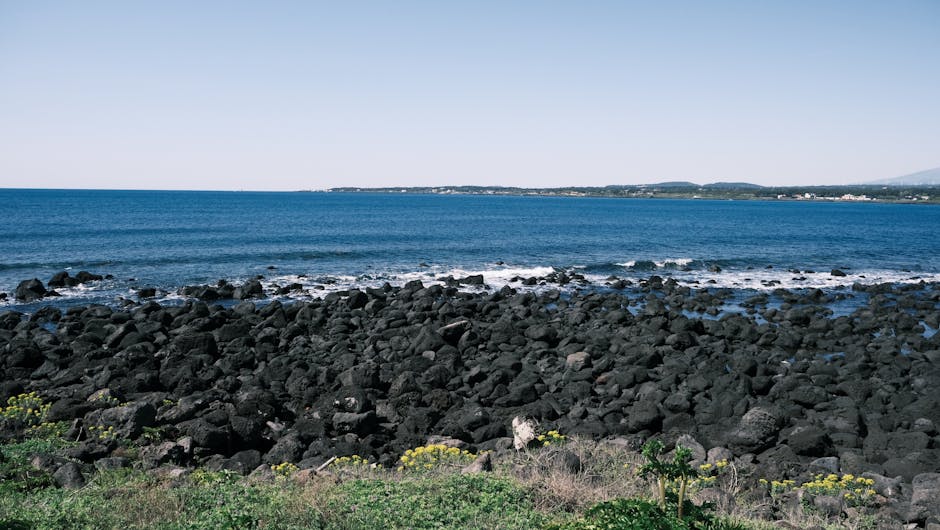
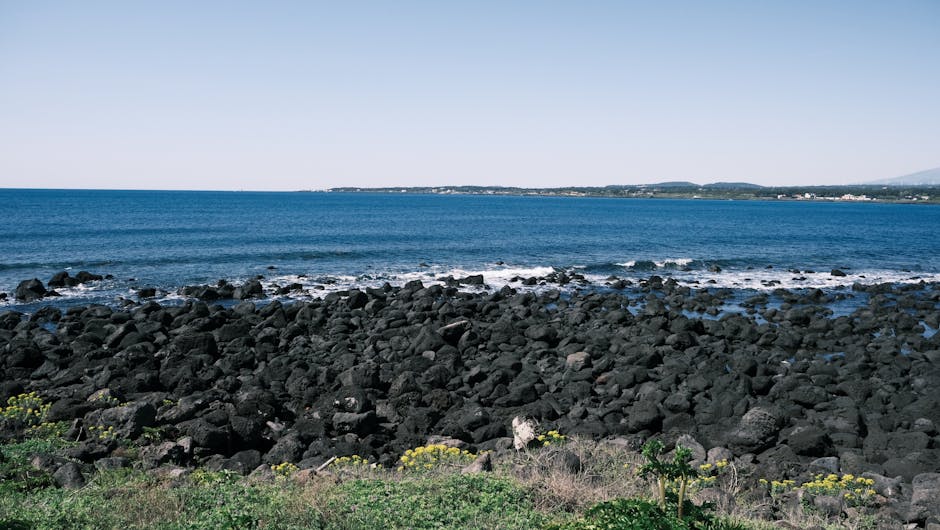
- Sinheung-ri Coastal Rock Fields, near Daejeong: A short walk south from Songaksan Mountain leads to a coastline of jet-black volcanic rock formations that locals call “the moon field.” There are zero tourist facilities here — which is exactly the point.
- Jeju Horse Ranch Back Roads (Seogwipo Interior): The horse culture of Jeju’s interior is one of the island’s most distinctive and least-documented traditions. A few ranches near Namwon offer informal visits if you simply show up respectfully and ask in Korean or basic English. In 2026, this remains one of the most authentic local experiences available.
- Hamdeok Beach’s Northern Rocky Point: Everyone knows Hamdeok Beach. Almost nobody walks fifteen minutes north along the coastal rocks to where the beach ends and a quiet tide pool ecosystem begins. Sea urchins, tiny crabs, and crystalline water — often completely unattended.
- Gueok-ri Wetland Area (곽지 하천 하구): Near Gwakji Beach on the northwest coast, a small freshwater-meets-saltwater estuary attracts migratory birds in spring and autumn. Birdwatchers have quietly circulated this spot, but it remains invisible to standard tourist itineraries.
International Parallels: How Other Islands Handle the Hidden Gem Dilemma
Jeju isn’t alone in navigating this tension between mass tourism and hidden beauty. In 2025-2026, Sardinia in Italy introduced a Destinazione Diffusa (Distributed Destination) policy that actively promotes inland villages and secondary coastal zones to reduce pressure on hotspots like Costa Smeralda. Similarly, the Azores in Portugal — another UNESCO-designated volcanic archipelago — uses a tiered booking system that caps daily visitor numbers at sensitive sites while keeping alternative trails free and open.
Jeju’s government has been piloting comparable approaches since 2024, with new signage systems for lesser-known Olle sub-routes and a “slow travel” certification program for guesthouses that offer locally guided itineraries. By 2026, about 40 certified “Slow Jeju” accommodations exist — many of them positioned precisely near the under-visited areas mentioned above.
The takeaway from global examples is consistent: the islands that manage tourism pressure best are the ones where travelers themselves choose distribution. And that choice begins with information — which is exactly what we’re building here.
Practical Tips for Navigating Jeju Independently in 2026
A few realistic notes before you start plotting your off-the-beaten-path itinerary:
- Rent a car or e-bike: Public transport in Jeju has improved, but reaching most hidden spots still requires independent mobility. E-bike rentals have expanded significantly in 2026, with stations now available in Hallim, Daejeong, and Seogwipo’s eastern suburbs.
- Use Naver Maps over Google Maps: For Jeju’s rural trails and small roads, Naver Maps (Korean navigation app) simply has more accurate and current data. Most Korean locals use it exclusively.
- Go mid-week, early: The difference between a Tuesday 7 AM visit and a Saturday 11 AM visit at even moderately popular spots is staggering. This single habit unlocks more of Jeju than any secret list.
- Respect the “no facility” zones: Many of these spots have no waste bins, no restrooms, and no staff. Pack out everything you bring in. Local environmental groups have been increasingly vocal in 2026 about protecting these areas from the same fate as overrun tourist zones.
- Learn five Korean phrases: Even a basic “이 근처에 조용한 곳 있어요?” (“Is there a quiet place near here?”) asked at a local café will often yield the most valuable hidden spot recommendations you’ll ever receive.
Realistic Alternatives If Hidden Spots Feel Too Remote
Not everyone visiting Jeju in 2026 wants to hike unmarked trails or navigate without English signage — and that’s completely valid. Here are some middle-ground alternatives that balance authenticity with accessibility:
The Jeju Stone Park (제주돌문화공원) in Gyorae-ri is significantly less crowded than comparable cultural sites, beautifully maintained, and genuinely educational about Jeju’s volcanic geology and mythology. The Spirited Garden (생각하는 정원) near Hallim is a privately cultivated bonsai landscape that most package tourists skip entirely. And the O’Sulloc Tea Museum’s surrounding green tea fields — particularly in the early morning before tour buses arrive — offer that “lost in a landscape” feeling without any navigational difficulty.
The point is this: hidden doesn’t always mean hard. Sometimes it just means slightly earlier, slightly further, or slightly less Instagrammed.
Editor’s Comment : Jeju in 2026 is simultaneously more visited and more discoverable than ever before — which sounds like a paradox until you realize that the infrastructure for independent exploration has quietly matured while the tourist crowds remain stubbornly concentrated. The island hasn’t gotten smaller; our curiosity just needs to get a little wider. Pick one spot from this list, go on a Wednesday, and bring your own coffee. That’s really all the preparation you need.
📚 관련된 다른 글도 읽어 보세요
- 2026 여름 방학 가족 여행 패키지 가성비 추천 – 예산별 최고의 선택지 총정리
- 2026 Family Travel Trends: The Rise of Healing & Educational Experience Trips
- Hidden Gems Only Locals Know: South Korea’s Best-Kept Travel Secrets in 2026
태그: [‘Jeju hidden spots 2026’, ‘Jeju off the beaten path’, ‘secret Jeju travel guide’, ‘Jeju slow travel’, ‘Jeju tourist-free spots’, ‘Jeju volcanic landscape’, ‘Jeju travel tips 2026’]
Leave a Reply