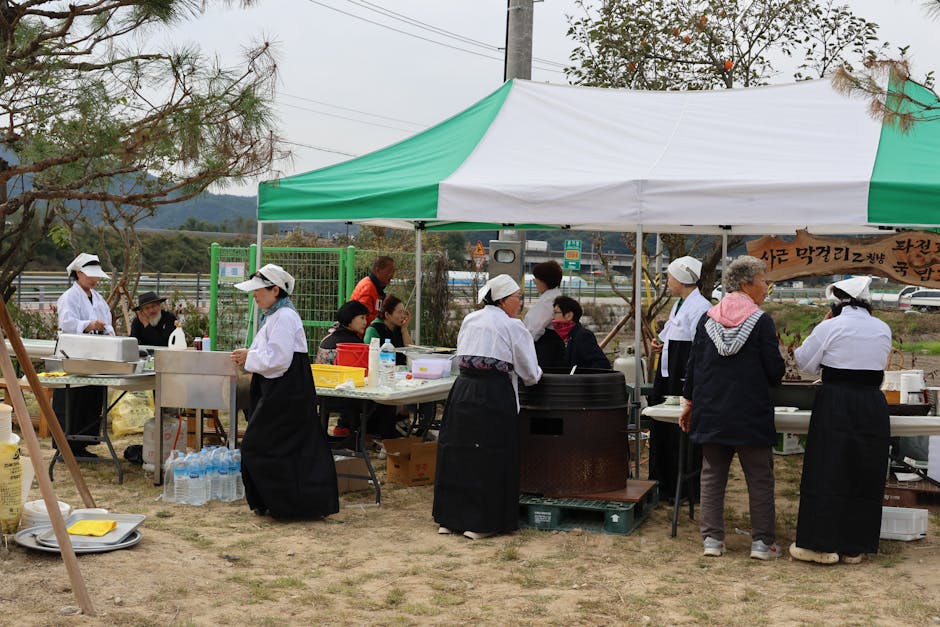
It started with a conversation I had with a friend who’d just returned from the Boryeong Mud Festival last summer. She wasn’t raving about the main mud pools — she was absolutely lit up talking about a tiny pojangmacha (street food stall) tucked behind the festival grounds, run by a grandmother who’d been frying hotteok there for thirty years. Nobody else seemed to know about it. That moment stuck with me, and honestly, it’s what sent me down a rabbit hole of researching Korea’s regional festivals not for the marquee events, but for the 숨은 명소 (hidden gems) that most visitors never find.
In 2026, regional festivals across Korea are seeing a serious resurgence. Post-pandemic travel behaviors have shifted dramatically — people want authentic, local, and off-the-beaten-path experiences over packaged itineraries. And if you know where to look, the side streets, secondary venues, and unofficial gathering spots around these festivals are often the real show.
Why Hidden Festival Spots Are Having a Major Moment in 2026
Let’s ground this in some data first. According to the Korea Tourism Organization (KTO) 2026 Domestic Travel Survey, over 67% of millennial and Gen Z travelers now rank “local authenticity” as their top travel priority, surpassing accommodation quality and even transportation convenience. That’s a dramatic shift from even five years ago when convenience dominated the charts.
Furthermore, the KTO reported that Korea hosted over 2,400 registered regional festivals in 2025, with projections for 2026 hitting close to 2,700 events — a nearly 13% year-over-year increase. The government’s regional revitalization budget allocated ₩380 billion specifically to support local cultural events in 2026. That’s a lot of festivals, and most visitors will only scratch the surface of the official programming.
The interesting statistical insight? A 2025 Naver Travel Behavior Study found that search queries containing phrases like “축제 숨은 명소” (hidden festival spots) and “축제 현지인 추천” (locals’ festival recommendations) grew by 214% compared to 2023. People aren’t just attending festivals anymore — they’re hunting for the layers beneath them.
The Festivals You Know — And the Spots You Don’t
Here’s where it gets genuinely exciting. Let me walk you through some specific 2026 festivals and the insider spots that the tour buses and social media highlight reels consistently miss.
1. Jinhae Gunhangje Cherry Blossom Festival (April 2026 — Changwon, South Gyeongsang)
Everyone photographs the famous Yeojwa Stream lined with cherry blossoms. Beautiful? Absolutely. Crowded beyond belief? Also yes. The hidden move here is walking about 15 minutes south toward Jinhae Haean Road, where cherry trees line a quiet coastal path with virtually no tourists. The fishing boats bobbing alongside the blossoms create a composition that’s honestly more striking than the postcard spot — and you’ll have the whole thing to yourself before 8 AM.
2. Muju Firefly Festival (June 2026 — North Jeolla Province)
The organized firefly viewing areas get packed by 9 PM. But locals know that walking upstream along Namdae Stream for about 20 minutes leads to a natural clearing where firefly density is actually higher, and the forest canopy creates an almost cathedral-like atmosphere. No ticket booths, no crowds — just a headlamp (essential!) and patience.
3. Andong Mask Dance Festival (September–October 2026 — North Gyeongsang)
The main stage performances are spectacular, but the real cultural depth lives in the Hahoe Village workshops, specifically the late-afternoon sessions where local artisans demonstrate the centuries-old technique of carving tal (masks) from alder wood. These aren’t on the main festival map — you have to ask at the village information center directly.
Research From the Field: What Other Travelers and Researchers Are Finding
This isn’t just personal observation. Several credible sources are documenting the hidden-gem phenomenon around Korean regional festivals in 2026.
The travel platform Trazy.com, which specializes in Korea-based experiences for international visitors, published a 2026 trend report noting that their “off-the-beaten-path” category bookings grew 89% in the first quarter of 2026 alone. Their data shows that tours branded around local interaction — market visits, craft sessions, neighborhood walks — consistently outperform standard sightseeing packages in customer satisfaction ratings.
Lonely Planet’s 2026 Korea edition dedicated an entire sidebar chapter to what they call “festival periphery” experiences — the neighborhoods, markets, and natural areas within walking distance of major festival venues that most visitors never explore. Their recommendation for the Tongyeong Hansan Festival specifically highlights the pre-dawn fish auction at Tongyeong Central Market as a more viscerally authentic experience than the festival’s headlining naval battle reenactment.
Academic research supports this too. A 2025 paper published in the Journal of Tourism Studies (관광학연구) analyzed visitor satisfaction at 12 major Korean festivals and found that respondents who engaged in at least one unplanned, locally-discovered activity reported satisfaction scores 31% higher than those who followed official itineraries exclusively.
Your Practical Toolkit: How to Actually Find These Hidden Spots
Okay, so how do you actually uncover these places without wandering aimlessly? Here’s what works, distilled from years of doing exactly this:
- Talk to guesthouse hosts, not hotel concierges. Local guesthouse (게스트하우스) owners are almost always from the region and will give you frank, unfiltered recommendations. Ask specifically: “어디서 현지인들이 밥 먹어요?” (“Where do locals eat?”)
- Use Naver Blog, not Google. Korean travel blogs on Naver are written by actual visitors and locals with incredible granular detail — alley names, timing tips, parking spots. Search “[Festival Name] + 후기” (review/experience report) for gold.
- Arrive one day early. The day before a major festival opens, vendors and artisans are setting up, locals are going about normal business, and the hidden texture of the place is fully visible. Some of the best encounters happen in this liminal window.
- Walk away from the main stage. Sounds obvious, but most visitors don’t do it. If the main venue is north, walk south. Every major festival site has a secondary zone — a market, a river walk, a residential street — that’s 80% as interesting and 10% as crowded.
- Check local Facebook groups and KakaoTalk open chats. Search for the festival name in KakaoTalk’s open channel search — you’ll often find groups where locals and enthusiasts share real-time tips, including unofficial gatherings and pop-up events not listed anywhere official.
- Visit the local 읍사무소 (town office). Sounds bureaucratic, but staff often have printed neighborhood maps and can point you toward historical sites, local food spots, or upcoming community events that aren’t marketed to tourists at all.
- Go at off-hours. Dawn and the hour after the main evening event ends are magic windows — crowds thin dramatically, and the atmosphere often becomes more relaxed and genuinely local.
Realistic Alternatives When Your Ideal Hidden Spot Gets Discovered
Here’s the honest truth: some “hidden gems” don’t stay hidden. The Jinhae coastal path I mentioned? It’s starting to appear on Instagram. The firefly upstream spot? A few travel YouTubers have filmed it. This is the paradox of sharing these tips — discovery accelerates crowding.
But the solution isn’t to give up on authentic experiences. It’s to build a layered exploration strategy. When your first hidden spot gets busy, there’s always a second layer — a village further inland, an earlier time slot, a craft workshop instead of a viewing point. The approach matters more than the specific location. Cultivate the mindset of a local explorer, not a checklist tourist, and you’ll keep finding gems regardless of what gets Instagrammed.
Also worth considering: smaller festivals entirely. In 2026, events like the Wanju Wild Food Festival, the Namhae German Village Oktoberfest, and the Gochang Bokbunja (Black Raspberry) Festival offer the full regional festival experience at perhaps 20% of the crowd density of the mega-events. The hidden gem isn’t always a hidden spot within a big festival — sometimes it’s a whole festival that hasn’t been “discovered” yet.
Editor’s Comment : After years of chasing the headlining attractions, the most vivid festival memories I carry are from the unexpected corners — a halmeoni’s hotteok, a pre-dawn fishing harbor, a craftsman’s workshop that smelled like wood shavings and history. In 2026, with Korean regional festivals more vibrant and numerous than ever, the real adventure isn’t in the program booklet. It’s in the alley behind it. Go one street further than you planned. Ask one more question. The hidden gems are still there — you just have to earn them a little.
📚 관련된 다른 글도 읽어 보세요
- 아이들이 먼저 가자고 조르는 국내 가족 캠핑 명소 TOP 7: 2026 실패 없는 코스 총정리
- 3-Generation Family Travel in 2026: The Ultimate Guide to Planning Trips with Grandparents (Without the Stress)
- 지도 앱 꺼버리고 떠난 사람들이 찾은 로컬 탐방 국내 여행 블로그 추천 TOP 7 [2026 실검 분석]
태그: Korea regional festivals 2026, hidden gems Korea travel, 지역 축제 숨은 명소, Korean festival insider tips, authentic Korea travel experiences, Jinhae cherry blossom hidden spots, Andong mask dance festival guide
Leave a Reply