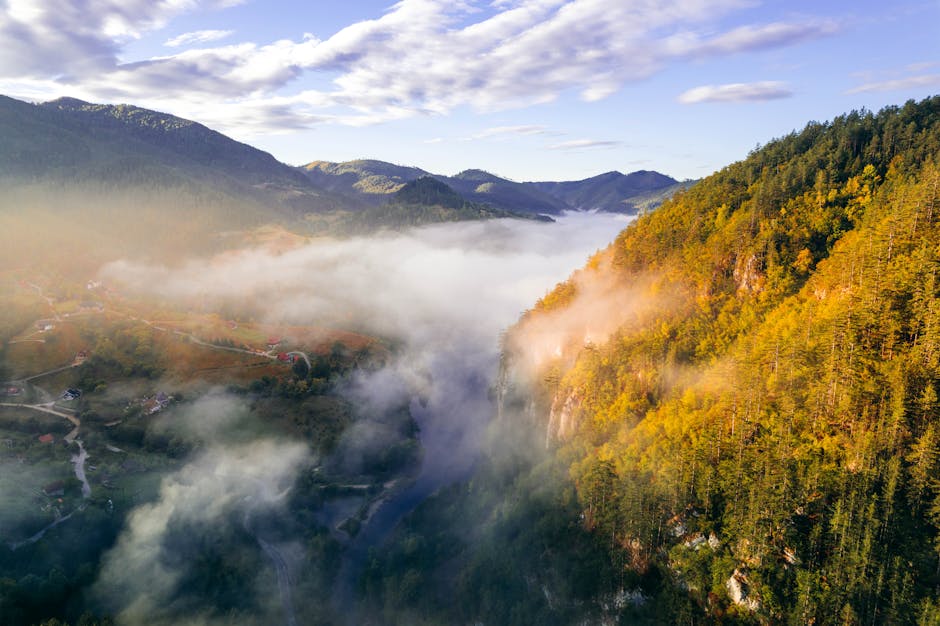
Last spring, I almost booked another flight to Jeju — again. My cursor was hovering over the ‘confirm purchase’ button when a friend texted me a photo: a misty riverside village in Uiseong, North Gyeongsang Province, where the fog sat so perfectly between ancient pine trees it looked like a painting someone forgot to finish. I immediately closed that tab. Sometimes the best travel decisions are the ones you almost didn’t make.
If you’ve been stuck in the Seoul-Busan-Jeju triangle of Korean travel (no judgment — we’ve all been there), 2026 is honestly the perfect year to break out. Domestic tourism in Korea’s small cities has quietly exploded with infrastructure investment, local food scenes that rival major metros, and a growing ‘slow travel’ culture that rewards the curious. Let’s think through this together and find your next favorite place.
Why Small-Town Korea Is Having a Serious Moment Right Now
Here’s something worth sitting with: according to the Korea Tourism Organization’s 2026 domestic travel index, visits to cities with populations under 150,000 increased by roughly 34% compared to 2022 figures. That’s not a blip — that’s a trend with legs. A few reasons are driving this:
- Remote work normalization: With hybrid and fully remote work now standard for roughly 41% of Korean office workers, the ‘need to rush back Monday morning’ constraint has loosened considerably.
- K-travel content boom: Short-form travel content creators have shifted focus from big cities to ‘discovery tourism,’ and their audiences are following suit.
- Local government investment: Regional cities have poured money into renovating old hanok districts, upgrading trailheads, and creating genuinely good cafe and restaurant scenes — not just tourist traps.
- Overcrowding fatigue: Bukchon Hanok Village queues, Jeju traffic on summer weekends — people are exhausted by crowds and actively seeking alternatives.
The Hidden Gems Worth Planning a Trip Around
Let me walk you through some spots that consistently surprise first-time visitors. These aren’t completely unknown — that would be irresponsible to promise — but they’re dramatically undervisited relative to their quality.
Uiseong (의성), North Gyeongsang: Famous for its garlic (seriously, the best in Korea) and increasingly recognized for its slow travel scene. The Uiseong Ice Cave — a natural phenomenon where ice forms inside a rocky hillside even in summer — is one of those experiences that makes you feel like you’ve found a cheat code in a video game. Combine it with a visit to the Socheon Hanok Village and you’ve got a genuinely full, unhurried weekend.
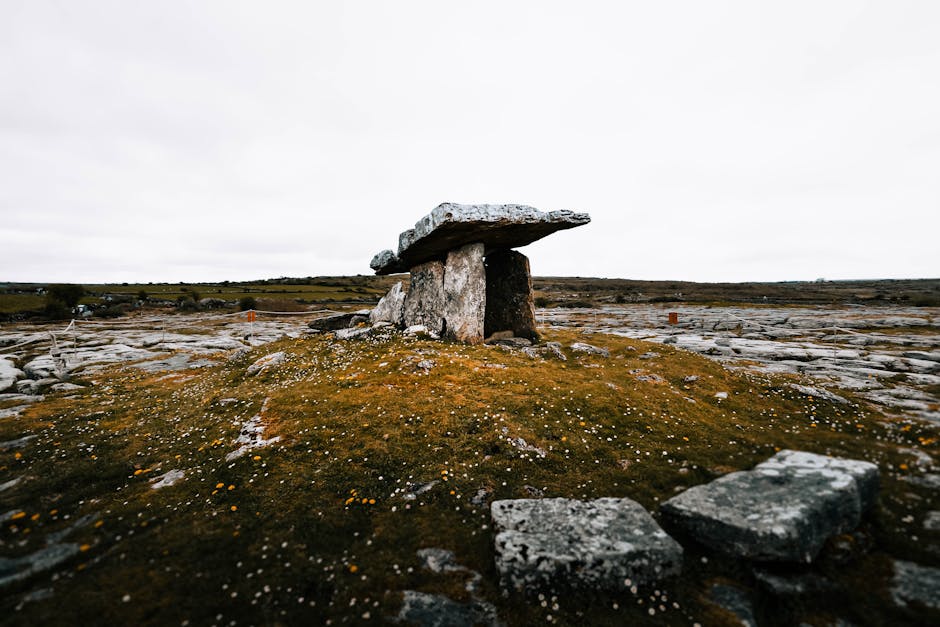
Gochang (고창), North Jeolla: This one operates on a different frequency than most Korean small towns. Gochang is home to a UNESCO World Heritage dolmen site — prehistoric burial monuments scattered across green fields like something from a fantasy novel — alongside Seonunsa Temple, one of the most serene Buddhist complexes in the country. Cherry blossoms here in early April rival anything you’ll see in Seoul, with about one-tenth of the crowd.
Yeongwol (영월), Gangwon: Perched in a dramatic river bend, Yeongwol punches way above its weight. It has a surprisingly rich arts district (the Donggang International Photo Festival draws serious photographers), a tragic historical site connected to King Danjong, and some of the most photogenic rafting terrain in Korea. The town is compact enough to walk most of it, which is rare and lovely.
Namhae (남해), South Gyeongsang: Technically an island but connected by bridge, Namhae has a reputation among Korean foodies as a kind of quiet paradise. The German Village — yes, a literal community founded by Koreans who returned from working in Germany in the 1960s and 70s — is charmingly bizarre and historically fascinating. The garlic bread sold at roadside stalls near the terraced rice paddies of Daraengi Village deserves its own travel article.
Boryeong (보령), South Chungcheong: Most people know Boryeong only from its famous mud festival in summer. But the city in autumn and winter is a completely different, much more intimate experience. The Daecheon Beach promenade is peaceful, the fresh seafood is absurdly affordable, and the nearby Oeyeon Island ferry trip gives you views that feel like you’ve stumbled into a maritime watercolor.
How to Actually Plan a Small-Town Korean Trip Without Frustration
Here’s where I want to be genuinely honest with you, because small-town travel has real logistical friction that travel content creators often gloss over. Most of these destinations are not well-served by public transit from Seoul. Here’s a realistic breakdown:
- If you don’t drive: Focus on Yeongwol (accessible by intercity bus from Seoul’s Dong Seoul Terminal in about 2.5 hours) or Boryeong (direct KTX connection from Seoul takes about 1 hour 40 minutes). Both have enough to do that you won’t feel stranded.
- If you can rent a car: Gochang, Uiseong, and Namhae open up beautifully. The drives themselves — especially through rural Jeolla Province — are part of the experience.
- Accommodation strategy: Skip the chains entirely. Local guesthouses and renovated hanok stays in these towns are often 40–60% cheaper than equivalent experiences in major cities and dramatically more atmospheric. Book at least 2–3 weeks ahead in 2026, because even ‘hidden’ spots now fill up on weekends.
- Food planning: Research one or two specific local dishes before you go. Each of these regions has a signature — Gochang’s complex bokbunjaju (black raspberry wine), Namhae’s raw sea squirt bibimbap, Yeongwol’s memil (buckwheat) dishes. Having that culinary anchor makes the trip feel intentional rather than random.
Learning from Global Slow Travel Trends
Korea isn’t alone in this pivot. Japan’s ‘satoyama’ rural tourism movement has been building for over a decade, with villages like Shirakawa-go and Teshima Island drawing visitors specifically because they feel antithetical to Tokyo’s pace. Portugal’s interior towns — Monsaraz, Marvão — have seen visitor numbers grow 60% since 2022 as Lisbon overflow pushed curious travelers inland. The pattern is consistent globally: when major destinations hit a saturation point, quality-seeking travelers redistribute toward authenticity.
Korea’s small towns are at exactly that inflection point right now in 2026. The infrastructure is getting good enough to be comfortable, but the crowds haven’t arrived in force yet. That window won’t stay open forever.
Realistic Alternatives Based on Your Travel Style
Not everyone has a full weekend to dedicate to a small-town trip, and that’s completely fine. Here are some calibrated options:
- Day-tripper from Seoul: Yeongwol or Chuncheon (slightly larger but has hidden corners near Soyang Lake worth discovering). Depart early, return by evening.
- First-time small-town traveler: Start with Boryeong — it has just enough amenities to feel safe while still feeling genuinely different from city travel.
- Experienced domestic traveler looking for a challenge: Uiseong or the islands of South Jeolla (Sinan archipelago) where you’ll need to piece together ferry schedules and genuinely improvise.
- Traveling with elderly family members: Gochang is unusually well-configured for multi-generational travel — flat walking paths near the dolmen sites, excellent local restaurants with traditional menus, and a calm pace that doesn’t demand physical endurance.
The beautiful thing about small-town Korea in 2026 is that it rewards curiosity over planning. You don’t need a perfectly optimized itinerary. You need a direction and a willingness to be surprised by what’s around the corner of a road you didn’t expect to take.
Editor’s Comment : The best trips I’ve ever taken in Korea weren’t the ones I planned the hardest — they were the ones where I gave a small town permission to show me what it actually was, rather than what I expected it to be. Pick one of these places, book a modest stay, and let yourself get a little lost. The fog over Uiseong or the prehistoric silence of Gochang’s fields will do the rest.
태그: [‘Korea small town travel’, ‘hidden gems Korea 2026’, ‘domestic travel Korea’, ‘slow travel Korea’, ‘Korean countryside destinations’, ‘off the beaten path Korea’, ‘소도시 여행’]
Leave a Reply