Picture this: It’s 6 AM at the airport, your 8-year-old is dragging a suitcase half their size, your 6-year-old has already asked “are we there yet?” seven times, and you haven’t even reached security yet. Sound familiar? If you’ve ever attempted international travel with elementary school-aged kids, you know it can feel like herding caffeinated cats through a maze. But here’s the thing — it doesn’t have to be chaotic. With the right prep, traveling abroad with your kids at this age can actually be one of the most rewarding experiences your family ever shares.
I recently spoke with a mom of three from Seoul who took her kids (ages 7, 9, and 11) on a 10-day trip through Portugal in early 2026. She told me, “The first trip was a disaster. The second trip? We had a system. Now the kids pack their own bags and remind me about the passport.” That kind of transformation doesn’t happen by accident — it comes from smart, experience-backed planning.
So let’s think through this together and build your family’s travel confidence from the ground up.

📊 Why Elementary School Age (6–12) Is Actually the Sweet Spot for International Travel
There’s a reason travel experts and family psychologists increasingly point to the 6–12 age window as one of the best times for meaningful international travel. Let’s look at what the data and research actually tell us:
- Cognitive readiness: According to developmental psychology frameworks, children in this age group are in Piaget’s “concrete operational” stage — they can process new environments logically, remember experiences vividly, and make meaningful connections between what they see and what they’ve learned.
- Memory formation: Studies in childhood memory suggest that experiences between ages 7–12 are among the most durably stored. Trips taken at this stage are far more likely to be remembered into adulthood than trips taken before age 5.
- Physical stamina: Unlike toddlers, elementary schoolers can walk 8–12 km per day with proper motivation (read: snacks and interesting stops). They’re also past the nap-schedule dependency that constrains itineraries.
- Language curiosity: Kids this age are in a prime window for linguistic curiosity. Exposure to foreign languages during travel has been shown to boost metalinguistic awareness and even improve performance in their native language.
- Independence practice: Traveling gives kids structured opportunities to practice autonomy — reading maps, managing a small budget, or navigating a foreign metro — skills that build lasting confidence.
🗺️ Building a Family-Proof Itinerary: Less Is More
One of the biggest mistakes parents make is overscheduling. I get it — you’ve saved up, you’ve flown 10 hours, and you want to squeeze in every museum, landmark, and local experience possible. But here’s the reality check: a tired, overstimulated 8-year-old will remember the gelato they dropped on the cobblestones far more than the fifth cathedral you visited that day.
The sweet spot for elementary-age kids? Plan no more than 2 major activities per day, with built-in “wandering time” that lets kids lead. Research from family travel consultants in 2026 consistently shows that child-led exploration segments — even just 45 minutes of letting kids choose which street to walk down — dramatically improve overall trip satisfaction for the whole family.
Consider this framework when building your daily schedule:
- Morning (energy peak): Tackle the big ticket item — a historical site, a nature hike, a city tour.
- Midday (recovery window): Lunch at a local spot with zero rush. Let kids try ordering in the local language.
- Early afternoon (kid’s choice): A park, a toy shop browse, a local playground. Yes, playgrounds in foreign countries count as cultural experiences.
- Late afternoon: Light exploration or hotel downtime — this is non-negotiable. Skipping rest leads to meltdown dinners.
- Evening: A relaxed dinner. Street food markets work brilliantly for picky eaters because there’s variety without pressure.
🌍 Real Family Travel Examples: What’s Working in 2026
Let’s look at some real-world scenarios to ground these ideas in actual family travel experiences happening right now.
Case 1 — Japanese families doing “edu-tourism” in Europe: A growing trend in Japan in 2026 has families pairing school curriculum topics with travel destinations. A family studying ancient history might choose Rome or Athens; one exploring marine biology books a trip to Norway’s fjords. Schools in Tokyo and Osaka have even begun issuing “travel learning journals” that kids complete on the road and submit for credit. The result? Kids arrive engaged, not just present.
Case 2 — Korean families and Southeast Asia short-hauls: With flight times of 4–6 hours to destinations like Vietnam, Thailand, and Japan, Korean families with elementary school kids have embraced short-haul international trips as “practice runs” for longer adventures. Destinations like Hoi An in Vietnam or Chiang Mai in Thailand offer manageable sensory loads, abundant kid-friendly food, and extraordinary cultural richness at a fraction of European costs.
Case 3 — Western families embracing “slow travel”: In the US and UK, a significant 2026 trend is families renting apartments abroad for 2–3 weeks instead of hotel-hopping. This “slow travel” model lets kids settle into a rhythm, make friends at a local playground, and genuinely experience daily life in another country rather than just photographing its monuments.
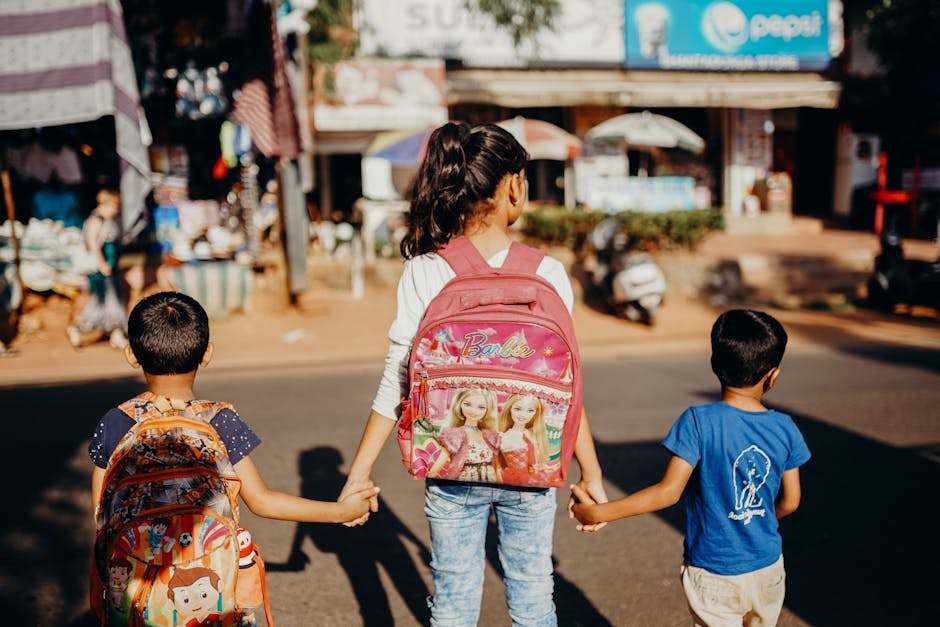
🎒 The Essential Packing Logic for Traveling with Elementary Kids
Here’s a mindset shift that changes everything: pack for the child’s autonomy, not just their comfort. When kids own their packing decisions (within a framework you set), they become invested in managing their own gear during the trip.
Try this system:
- The 5-4-3-2-1 rule for kids’ clothing: 5 underwear, 4 tops, 3 bottoms, 2 pairs of shoes, 1 light jacket. Adjust for trip length but use this as a base.
- Their own small daypack: Each child carries their own bag with their water bottle, one snack, one small toy or book, and their own passport holder (kids love having ownership of this).
- Entertainment kit curated by the child: Let them pick 3 items from home to bring. The restriction forces intentional choices and prevents the “I’m bored” complaint within 20 minutes of boarding.
- Health essentials translated: Carry a card with your child’s known allergies written in the local language. Apps like Google Translate now allow real-time camera translation in 2026, but a physical card is a reliable backup.
- The “boredom buster” envelope: A sealed envelope filled with small activities, puzzles, or tiny surprises opened only during long transit. The novelty factor is remarkable.
💡 Realistic Alternatives If International Travel Isn’t Feasible Right Now
Let’s be honest — international family travel is a significant financial and logistical commitment. Not every family is in a position to hop on a 10-hour flight this year, and that’s completely valid. But the goals behind international travel — cultural exposure, building adaptability, creating shared memories — can be pursued through smart alternatives:
- Domestic destinations with international character: Cities with strong immigrant communities (think Koreatown in LA, Little Italy in New York, or Chinatown in virtually every major city) offer genuine cultural immersion without passport logistics.
- Cross-border day trips: If you’re in Europe or North America, a day trip across a nearby border (France to Belgium, US to Canada or Mexico) gives kids a tangible international experience with minimal planning burden.
- Cultural home experiences: Cook a dish from your target country together, watch a film set there, connect with a pen pal abroad through international exchange programs. These “pre-trips” also make eventual real travel far richer.
- Regional festivals and cultural events: In 2026, most major cities host international cultural festivals that bring genuine experiences — food, music, crafts, language — to your doorstep.
The point isn’t that international travel is the only path to raising globally curious kids. It’s one powerful tool among many. The families who travel best are the ones who’ve already cultivated curiosity and adaptability at home.
So whether you’re boarding a flight next month or planning a kitchen “trip” to Thailand tonight, the spirit of exploration is entirely within reach.
Editor’s Comment : The best souvenir your child can bring home from international travel isn’t a keychain or a magnet — it’s a slightly expanded sense of what the world is and who they might become in it. Start small, stay flexible, and remember: a missed museum is forgotten by Tuesday, but a shared laugh over a mistranslated menu? That’s a family story for life. Safe and joyful travels in 2026. ✈️
태그: [‘family travel 2026’, ‘traveling with elementary school kids’, ‘international travel tips for parents’, ‘kid-friendly travel itinerary’, ‘overseas travel with children’, ‘family vacation planning’, ‘travel hacks for kids’]
Leave a Reply