A friend of mine spent two weekends building a beautiful-looking hydroponic setup, bought the right nutrients, set up the grow lights — and then watched every single lettuce seedling turn yellow and collapse within two weeks. She called me frustrated, convinced hydroponics was “way harder than YouTube made it look.” Sound familiar? That conversation is pretty much why I decided to write this.
Here’s the thing: growing lettuce hydroponically is genuinely one of the easiest crops to start with — but only once you understand the three or four places where things quietly go wrong. Let’s walk through this together, from system choice to harvest, with the real numbers and real pitfalls nobody puts in the intro videos.
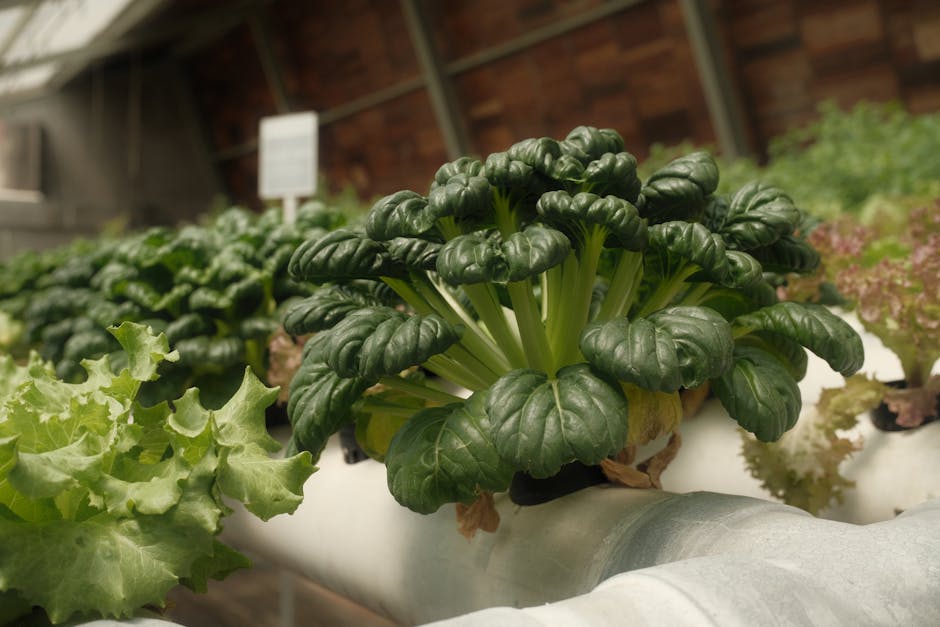
Why Lettuce Is the Right First Crop (and Why It Still Trips People Up)
Lettuce has a short growth cycle — typically 30 to 45 days from transplant to harvest depending on variety — and it has a relatively forgiving nutrient window compared to fruiting crops. Its ideal electrical conductivity (EC) sits between 0.8 and 1.6 mS/cm, and its pH sweet spot is 5.5 to 6.5. Go above pH 7.0 and you’ll start seeing iron and manganese lockout, which is exactly what yellowing lower leaves usually signals. That’s the most common beginner mistake: chasing nitrogen deficiency when the real problem is pH-induced nutrient lockout.
The second most common mistake? Treating tap water like neutral ground. In many municipalities, tap water comes in at pH 7.2–7.8 right out of the pipe, and chloramine (not just chlorine) is increasingly used as a disinfectant. Unlike chlorine, chloramine doesn’t off-gas simply by letting water sit overnight. You need either a carbon block filter or a small dose of sodium thiosulfate to neutralize it. If you skip this step, you’re adding a mild root-zone toxin to every reservoir refill.
Choosing Your System: NFT vs. DWC vs. Kratky — With Real Numbers
There are three main entry points for hobby-scale lettuce production in 2025, and each has a different failure profile:
- NFT (Nutrient Film Technique): A thin film of nutrient solution flows continuously along the bottom of angled channels. Excellent for lettuce because roots get both oxygen and nutrients. Risk: if your pump fails for more than 30–60 minutes in warm conditions, roots dry out fast. Starter kits from brands like General Hydroponics or Greentowers typically run $80–$180 USD for a 30-site system. Power draw: 5–15W for the pump.
- DWC (Deep Water Culture): Roots hang directly into oxygenated, nutrient-rich water. Simpler mechanically — just a reservoir, air pump, and net pots. Ideal EC for lettuce in DWC is on the lower end, around 0.8–1.2 mS/cm, because roots have maximum exposure. The main issue is reservoir temperature: keep water between 18–22°C (64–72°F). Above 24°C, dissolved oxygen drops sharply and pythium (root rot) becomes a serious risk. Budget: $30–$60 DIY, or $80–$150 for kits like the Current Culture UC system.
- Kratky Method (Passive DWC): No pump, no electricity for water movement. You fill a reservoir, suspend net pots, and let plants drink down the water while an air gap forms above the waterline for oxygen. This is legitimately the lowest-barrier entry point — a 5-gallon bucket and a net pot lid can be built for under $15. The catch: it doesn’t scale easily, and you can’t adjust nutrient concentration mid-cycle without fully draining. Great for 1–4 plants; awkward for anything larger.
Light: The Variable Everyone Underestimates
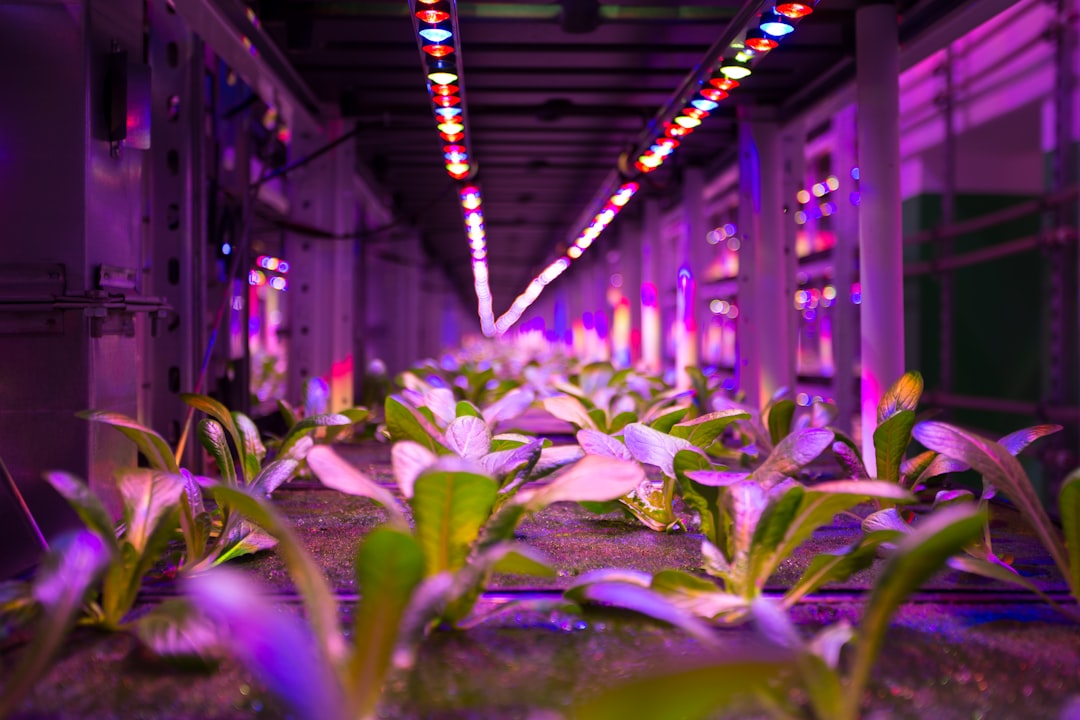
If you’re growing indoors, this is where your electricity bill and your harvest yield meet. Lettuce needs roughly 25–30 mol/m²/day of Daily Light Integral (DLI) for optimal growth — that translates to about 200–250 µmol/m²/s PPFD for 16–18 hours per day. The good news is that lettuce doesn’t need expensive high-intensity lighting. A quality full-spectrum LED panel pulling 100–150W actual wattage can cover a 60x60cm (2×2 ft) grow area adequately.
In 2025, brands like Mars Hydro (FC-E1000, ~$99), Spider Farmer (SF-1000, ~$109), and Quantum Board setups from HLG (Quantum 100, ~$149) are all legitimate choices that have been independently tested by hobbyist communities on forums like Reddit’s r/microgrowery and the Rollitup forums. Key stat to look for: efficacy in µmol/J. Anything above 2.0 µmol/J is considered efficient for LEDs currently. Cheaper panels from unverified brands often claim high wattage but deliver 30–40% less actual PPFD than advertised.
One honest note on cost: if you’re running 150W of LED lighting for 16 hours per day at an average US electricity rate of $0.16/kWh (2025 EIA estimate), that’s about $11.52/month in electricity for the lights alone. Factor that in when you’re comparing “free salad” to grocery prices.
Nutrients: The Three-Number System Simplified
Walk into any hydroponic store and you’ll see nutrient bottles with three numbers on the label — that’s the NPK ratio (Nitrogen, Phosphorus, Potassium). For lettuce, you want a vegetative-forward formula, something like 3-1-2 or 4-1-2 NPK. Products that consistently perform well in the hobby community include:
- General Hydroponics Flora Series (3-part system, allows precise tuning — recommended by UC Davis Extension for hobby growers)
- Masterblend 4-18-38 (professional greenhouse formula, surprisingly affordable at ~$15/lb, often mixed with calcium nitrate and Epsom salt)
- MaxiGro by General Hydroponics (single-part powder, EC-stable, great for beginners — just add and measure)
Start every reservoir at half the recommended dose, especially with seedlings. Most nutrient burn in the first two weeks comes from following label instructions exactly — those are often calibrated for more mature, faster-growing plants. Build up to full strength around week two post-transplant.
The Real Timeline: What to Expect Week by Week
Here’s the honest breakdown that most beginner guides skip:
- Days 1–7 (Germination): Use a germination plug (rockwool or rapid rooter). Keep moisture high, temperature around 20–24°C. Don’t flood with nutrients yet — plain pH-balanced water is enough. Expected germination rate for quality seeds: 85–95%.
- Days 7–14 (Seedling transfer): Once roots are visible through the plug (typically 1–2cm emergence), transfer to your system. This is the highest-risk phase — transplant shock is real. Keep EC low (0.6–0.8 mS/cm), pH at 5.8–6.0.
- Days 14–28 (Vegetative growth): Raise EC to 1.0–1.4 mS/cm. Monitor for tip burn — it’s caused by calcium deficiency specifically inside the leaf, even when nutrient solution calcium is adequate. The fix is increased airflow across leaves, not more calcium in the reservoir.
- Days 28–45 (Pre-harvest): Loose-leaf varieties like Oak Leaf or Butterhead are typically ready. Romaine takes the longer end. Harvest outer leaves continuously (cut-and-come-again) or take the whole head.
Where to Find Reliable Community Knowledge in 2025
Beyond product manufacturers (who obviously have marketing interests), a few genuinely useful resources have held up: the Bright Agrotech YouTube channel (now archived but still excellent for raft system basics), the Hydroponics subreddit (r/hydro) which has an active wiki, and university extension publications from Cornell Controlled Environment Agriculture program — these are free and peer-reviewed. For equipment reviews without affiliate-link bias, the Hoagland’s Solution Discord community has active growers posting actual measured data.
When Hydroponics Might Not Be Worth It (Yet)
Honest conditional recommendation time: if your goal is simply to eat more salad cheaply, a soil container garden on a sunny windowsill or balcony will beat hydroponics on cost-efficiency until you’re growing at least 20+ heads per cycle. Hydroponics shines when you have limited space, want faster cycles, or want to grow year-round indoors with predictable results. If your situation is “I want salad and have a sunny outdoor space,” choose soil pots. If your situation is “I live in a northern climate apartment and want greens in January,” choose DWC or Kratky with an LED setup.
The initial investment of $100–$300 for a decent beginner hydroponic setup typically pays back in saved produce costs after 6–12 months of consistent growing — but only if you stick with it long enough to move past the learning curve, which realistically means getting through your first failed batch without quitting.
💬 Have a question or a story about your first hydroponic attempt? Drop it in the comments — especially if you’ve dealt with that mystery yellowing or pump failure scenario. There’s almost always a fixable cause, and talking through it with someone who’s been there makes the second attempt go way smoother. You’re not alone in finding this trickier than the tutorials suggest, but the payoff of cutting your own lettuce in January is genuinely worth the learning curve.
📚 관련된 다른 글도 읽어 보세요
- Why I Almost Skipped It — The Real Guide to Tanjung Piai National Park in 2025
- 6개월 타고 팔아버린 이유 — 기아 EV3 사기 전에 제발 이것만 확인하세요 2026년 기준
- Why I Almost Gave Up on Forex — And What Actually Works in 2025
태그: hydroponic lettuce, beginner hydroponics, DWC growing, indoor gardening, hydroponic nutrients, LED grow lights, Kratky method
Leave a Reply