A friend of mine — let’s call him Marcus — signed up for a Muay Thai gym back in January with zero prior martial arts experience. By day three, his shins looked like he’d played soccer barefoot on a gravel road, his hips couldn’t rotate past 45 degrees, and his coach kept telling him to ‘relax’ while he was anything but. He called me on a Thursday night ready to cancel his membership. I talked him out of it. Six months later, he competed in his first interclub. Here’s everything I wish I’d handed him in week one — the stuff no YouTube tutorial or gym website actually tells you upfront.
What Muay Thai Actually Demands (That Nobody Warns You About)
Most combat sports recruit one or two dominant physical qualities. Boxing is hand-eye coordination and footwork. Wrestling is core strength and leverage. Muay Thai uses all eight limbs — fists, elbows, knees, and kicks — which means your body has to develop coordination patterns it has likely never used before, all at the same time.
In 2025, data from the World Muay Thai Council’s beginner tracking programs across Southeast Asian academies shows that the average new practitioner takes 8–12 weeks just to execute a technically clean teep (push kick) without losing balance. That’s not failure — that’s neuromuscular adaptation. Your brain is literally building new motor pathways. The frustration Marcus felt wasn’t weakness; it was biology.
Here’s the honest breakdown of what your body goes through in the first month:
- Weeks 1–2: Shin conditioning begins. Micro-fractures in the tibia actually heal denser over time (that’s the science behind why veteran fighters have shins that feel like baseball bats). Expect bruising. Expect tenderness. Ice, elevate, and keep going.
- Weeks 2–4: Hip flexor soreness peaks. Roundhouse kicks require hip rotation your desk-job body probably hasn’t done in years. Prioritize hip mobility work — pigeon pose and couch stretch are your best friends outside the gym.
- Weeks 3–6: Cardiovascular adaptation. Muay Thai rounds are 3 minutes with 1-minute rest. Your aerobic base needs to catch up. Don’t be embarrassed by gasping — every fighter has been there.
- Week 6+: Coordination starts clicking. The stance, the guard, the basic combination (jab-cross-kick) begins to feel less like a foreign language and more like a reflex.
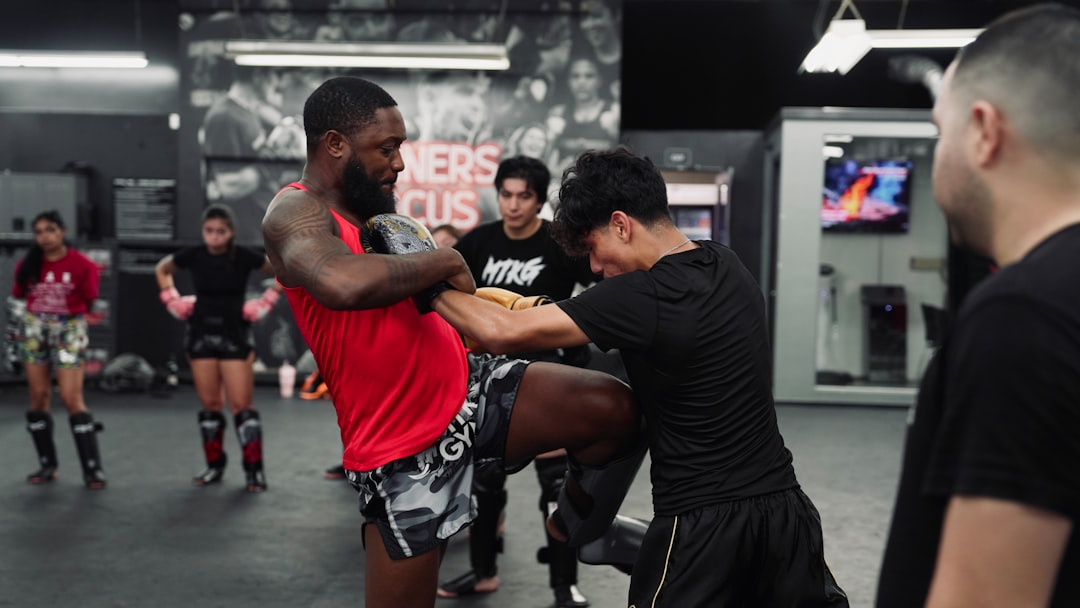
Gear: What You Actually Need vs. What Gyms Try to Sell You
This is where beginners consistently overspend or — more dangerously — underspend. Let me break it down clearly.
Non-negotiables from day one:
- Mouth guard: A boil-and-bite from Shock Doctor (~$20–$30) is completely fine to start. Don’t let anyone talk you into a custom guard until you know you’re sticking with the sport.
- Hand wraps: 180-inch cotton wraps. Fairtex and Twins Special both make excellent options in the $8–$15 range. Learn the knuckle-wrist wrap technique on YouTube before your first bag session — unwrapped hands plus heavy bag equals sprained wrists.
- Gym gloves (loaner or own): If your gym loans gloves, use them for the first two weeks just to assess sizing. When you buy your own, 14oz gloves are the standard for bag and pad work for most adults. Fairtex BGV1 (~$80) and Twins Special BGVL3 (~$75) are the most-recommended entry-level options that also last 3–5 years with proper care.
Wait before buying:
- Shin guards: Borrow from the gym for 2–3 weeks. Once you know your preferred fit (instep vs. full-length), then invest in a pair like the Hayabusa T3 (~$70) or Fairtex SP5 (~$65).
- Headgear: Only necessary when you start sparring — typically 4–8 weeks in, depending on gym policy.
- Shorts: Traditional Muay Thai shorts are cut high and wide to allow full hip extension. Any pair works. Don’t spend more than $30 until you care about aesthetics.
Choosing the Right Gym — The Question That Changes Everything
In 2025, Muay Thai has exploded globally. Thailand still produces the world’s elite (Lumpinee Stadium in Bangkok remains the gold standard of competitive Muay Thai, with televised cards drawing millions of viewers), but quality coaching now exists across the US, Europe, and Australia at genuinely high levels.
Here’s how to evaluate a gym without getting fooled by aesthetics:
- Coach credentials: Ask directly. A coach who trained in Thailand, competed professionally, or holds WBC Muay Thai / IFMA-affiliated certification is a green flag. Vague answers are a yellow flag.
- Beginner class structure: Good gyms separate beginner and advanced classes, at least partially. If you’re thrown into a single open class on day one with fighters who’ve been training for years, the gym prioritizes revenue over development.
- Sparring culture: Observe a sparring session before joining. Are people going hard and reckless, or is there clear control and respect? High injury rates in beginners are a coach accountability problem, not a “sport is dangerous” inevitability.
- Trial class availability: Most reputable gyms offer a free or discounted first class. Any gym that demands a month’s commitment before you’ve trained once is a soft red flag.
The Training Schedule That Actually Builds Progress (Without Burning Out)
Marcus’s initial mistake — and honestly the mistake 70% of enthusiastic beginners make — was training five days a week from week one. Enthusiasm is wonderful. Overuse injuries are not.
Here’s a realistic beginner ramp-up schedule:
- Weeks 1–4: 2–3 sessions per week. Let adaptation happen. Use off days for light mobility work (hip flexors, thoracic spine rotation).
- Weeks 5–8: 3–4 sessions per week. Add one dedicated bag round session if available.
- Month 3+: 4–5 sessions per week is sustainable for most people at this point, with one active recovery day (swimming, yoga, or a long walk).
A 2025 survey by the Martial Arts Industry Association found that 62% of gym dropouts in combat sports cite injury in the first 60 days as their primary reason for quitting. Almost all of those injuries correlate with insufficient recovery time in the first month. Train smarter, not harder — at least until your body has had a chance to catch up with your ambition.
Mindset: The Invisible Part of the Curriculum
Here’s something no gear guide or technique video covers: Muay Thai will make you feel incompetent in front of other people repeatedly, for months. This is structurally built into the learning process. You will throw a kick and fall over. You will get tapped in pad work by someone half your size. You will forget the combination the second the coach walks away.
The practitioners who stick with it aren’t the ones who are naturally talented (though talent helps). They’re the ones who reframe incompetence as data. Every mistake is your body telling you exactly where the next improvement lives. Thai boxing culture, particularly in its traditional form, actually has a philosophical framework for this — the concept of kreng jai (consideration for others’ feelings) extends into training halls, where ego is quietly discouraged and collective improvement is valued over individual showboating.
If you can stay curious instead of defensive when you’re corrected, you’ll outlast 80% of the people who start alongside you.
Realistic Expectations: What Six Months Looks Like
If you train consistently (3–4 sessions per week) and follow a smart recovery approach, here’s what’s genuinely achievable by month six:
- Solid fundamental technique: jab, cross, hook, teep, roundhouse kick, basic clinch entries
- Ability to hold pads for a partner at beginner level
- Comfortable light sparring (controlled, technical)
- Measurable cardiovascular improvement (resting heart rate often drops 5–10 BPM in consistent practitioners)
- Eligibility for an interclub or beginner smoker event at most gyms
Competitive fighting at a sanctioned level typically requires 12–18 months minimum for most adults starting from zero, and that’s with consistent training. Anyone telling you otherwise is either selling something or describing exceptional talent.
Bottom line: Muay Thai is one of the most complete physical and mental disciplines you can take on as an adult, but it asks for patience in the early weeks when frustration runs highest. If Marcus had quit on day four, he’d have missed the point entirely — which is that the hard part at the beginning is the point. The shin that hurts today is the shin that won’t flinch in six months. Start slow, gear up intelligently, find a gym that teaches rather than just trains, and give yourself the full 90-day window before making any judgments. The sport has been around for centuries for a reason.
📚 관련된 다른 글도 읽어 보세요
- 2026년 기준 비교해보니 진짜 되는 건 이것뿐 — AI 코딩 어시스턴트 실전 비교 (Cursor vs Copilot vs Cline)
- Why My First Battery Bank Build Failed — Real 2025 LiFePO4 DIY Guide
- Why I Almost Gave Up on Solar Panels — Real 2025 Home Energy Guide
태그: []
Leave a Reply