A friend of mine — let’s call him Dave — spent nearly $28,000 on a home solar installation last spring. Six months later, he called me frustrated: his electricity bill had barely budged. Turns out, his installer had oversized the inverter, the panels were partially shaded by a neighbor’s new fence extension, and nobody had run a proper load analysis before signing the contract. Dave’s story isn’t unique. It’s actually the most common solar horror story I hear in 2025, and it’s exactly why I wanted to break this topic down the way I wish someone had done for Dave before he signed that dotted line.
The Fundamentals: How Home Solar Actually Works (And Where It Goes Wrong)
At its core, a residential solar system converts photons from sunlight into direct current (DC) electricity via photovoltaic (PV) cells. Your inverter then converts that DC into alternating current (AC) that your home appliances can use. Sounds simple — and conceptually it is. But the gap between theory and a well-performing installation is where thousands of dollars get quietly lost.
The key components you’re dealing with:
- Solar Panels (Modules): Measured in watts peak (Wp). In 2025, mainstream residential panels range from 400Wp to 450Wp per panel. Top-tier monocrystalline panels (like Panasonic EverVolt or REC Alpha Pure-R) hit efficiencies of 22–23%. Budget panels from lesser-known brands often underperform their rated specs by 5–8% in real-world conditions — which adds up fast across a 25-year lifespan.
- Inverter: The brain of the system. String inverters are cheapest but create a “weakest link” problem — if one panel underperforms (shade, dirt, defect), the whole string drops. Microinverters (Enphase IQ8 series) and DC optimizers (SolarEdge) solve this but add $1,500–$3,000 to your system cost.
- Battery Storage: Optional but increasingly important. The Tesla Powerwall 3 (released late 2024) now offers 13.5 kWh usable storage at around $9,200 installed. LG RESU and Enphase IQ Battery 5P are solid alternatives. Without storage, you’re grid-dependent the moment the sun goes down.
- Mounting & Racking: Often underestimated. A poor racking system on a tile or metal roof can void your roof warranty or cause leaks within 3–5 years.
- Monitoring System: Non-negotiable in 2025. Both Enphase Enlighten and SolarEdge monitoring platforms give you panel-level data. If your installer doesn’t offer this, walk away.
Real Numbers: What Does a Home Solar System Actually Cost in 2025?
Let’s get concrete. The average U.S. residential solar installation in 2025 sits at roughly $2.85–$3.40 per watt before incentives, according to Wood Mackenzie’s Q1 2025 solar report. For a typical 8 kW system (enough to offset 80–100% of average American household consumption of ~10,500 kWh/year), that’s a gross cost of $22,800–$27,200.
Here’s where the math starts working in your favor — or not, depending on your situation:
- Federal Investment Tax Credit (ITC): Still at 30% through 2032 under the Inflation Reduction Act. On a $25,000 system, that’s $7,500 directly off your tax bill — not a deduction, an actual credit. Critical distinction.
- State incentives: Vary wildly. New York’s NY-Sun program offers additional rebates of $0.20/W for systems under 7 kW. California’s SGIP (Self-Generation Incentive Program) offers battery-specific rebates up to $1,000/kWh for certain customers. Massachusetts has the SMART program. Texas? Minimal state-level support, though property tax exemptions apply.
- Net Metering: This is where Dave’s situation compounds. In 2025, California’s NEM 3.0 (now in full effect) pays exported solar at roughly $0.05–$0.08/kWh — far below the $0.30+ retail rate. If you’re in California and you sized your system to maximize exports without a battery, you’re leaving serious money on the table. Self-consumption optimization is the new name of the game.
Payback periods in favorable states (Massachusetts, New York, New Jersey) with high electricity rates (~$0.25/kWh+) now average 6–8 years. In low-rate states like Louisiana ($0.11/kWh average), that stretches to 12–15 years. Your specific payback calculation should always include your actual utility rate, your roof’s solar access (measured by a shade analysis tool like Aurora Solar or HelioScope), and your annual consumption pattern.
The Shading Problem: Why Your Neighbor’s Tree Might Cost You $4,000
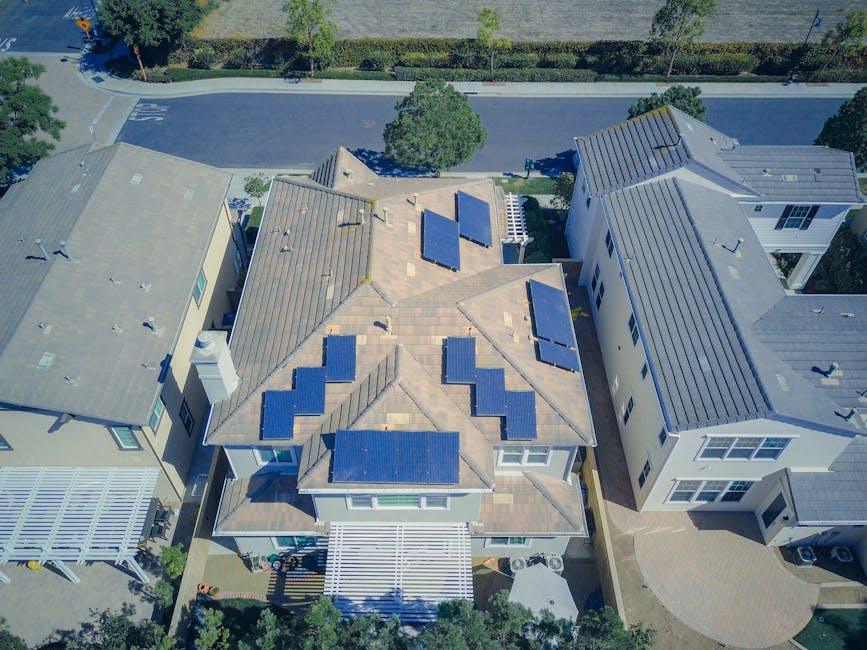
This is the issue that kills more solar ROI calculations than any other single factor. A string inverter system losing even 10% of its panels to partial shading can see whole-system output drop by 25–40% depending on stringing configuration. I’ve seen real installation reports where a chimney shadow hitting two panels from 2–4 PM knocked annual production down by 1,100 kWh — at $0.25/kWh, that’s $275/year, or $6,875 over a 25-year system life.
The fix: always request a shade analysis report (most reputable installers use Aurora Solar, which uses 3D modeling and real TMY weather data) before agreeing to any system design. If shading is unavoidable, insist on microinverters or DC optimizers. The upfront cost difference pays itself back in 3–5 years in shaded conditions.
Choosing an Installer: The Red Flags I Look For
The installer matters as much as the equipment. In 2025, SEIA (Solar Energy Industries Association) reports over 10,000 active residential solar installers in the U.S. Quality ranges enormously. Here’s my personal checklist:
- NABCEP (North American Board of Certified Energy Practitioners) certified installers — non-negotiable
- At least 5 years in business with verifiable local references (not just Google reviews)
- Uses equipment from tier-1 manufacturers (check BNEF Tier 1 module list)
- Provides a detailed production estimate in kWh (not just “offset percentage”) with weather data source cited
- Offers workmanship warranty of 10+ years separate from equipment warranties
- Pulls all necessary permits — if they suggest skipping permits to “save time,” run
- Doesn’t use high-pressure same-day closing tactics
Companies like Sunrun, SunPower (now operating under new ownership post-2024 restructuring), and Palmetto Solar offer national coverage with relatively standardized quality, though at premium prices. Regional installers often beat them on price by 15–20% while offering more personalized service — but due diligence is your responsibility.
Battery Storage in 2025: Do You Actually Need It?
Short answer: it depends on your utility’s net metering policy and your risk tolerance for outages. Long answer: if you’re in California under NEM 3.0, Hawaii, or any state with time-of-use (TOU) rates where peak rates hit $0.45/kWh+ in the evening, battery storage has crossed the threshold from “nice to have” to “financially sensible.” The Tesla Powerwall 3’s ability to stack with up to 4 units (54 kWh total) and its integrated inverter design (eliminating a separate inverter cost) makes the math increasingly reasonable for whole-home backup scenarios.
If you’re in a state with full retail net metering (still available in many mid-Atlantic and Midwest states), a battery adds complexity and cost without proportionate financial return — though the resilience value during grid outages is real and personal. Assign that a dollar value based on your own risk profile.
What If Solar Doesn’t Work for Your Home?
Not every roof is a good solar roof — and that’s okay. If your roof faces primarily north, has less than 15 years of life remaining, carries significant shading, or your annual consumption is below 6,000 kWh, solar’s economics may not pencil out. Realistic alternatives worth exploring:
- Community Solar: Available in 22+ states, lets you subscribe to a share of an offsite solar farm and receive bill credits at 5–15% discount to retail rate. No roof installation required. EnergySage’s community solar marketplace is a good starting point.
- Green Tariff Programs: Many utilities now offer 100% renewable electricity options at modest premiums ($5–$15/month for average households).
- Deep Energy Efficiency First: In many cases, spending $3,000–$5,000 on air sealing, insulation, and a heat pump upgrade yields faster payback than solar alone — and creates a smaller system requirement when you do go solar later.
Dave, by the way, ended up retrofitting his system with DC optimizers (around $1,800 installed), trimming the fence with his neighbor’s agreement, and adding a single Powerwall to maximize self-consumption. His last two billing cycles showed 87% offset. It wasn’t a perfect story, but it got a lot better — and that’s usually how solar actually goes in the real world: iterative, improvable, and worth understanding before you commit.
Pro Tip: Before you get your first installer quote, spend 20 minutes on EnergySage.com to get 3–5 competing quotes with standardized comparison metrics. The average EnergySage user saves 20–30% compared to single-quote buyers — and that head start on understanding the numbers is exactly the leverage Dave didn’t have going in.
📚 관련된 다른 글도 읽어 보세요
- 그냥 사면 후회해요 — 2026년 기준 입문자가 절대 모르는 드립백 커피 완전 정복 가이드
- Why I Almost Skipped It — The Real Guide to Tanjung Piai National Park in 2025
- Why I Almost Quit After Week One — Honest 2025 Guide to Getting Started with Keyword
태그: []
Leave a Reply