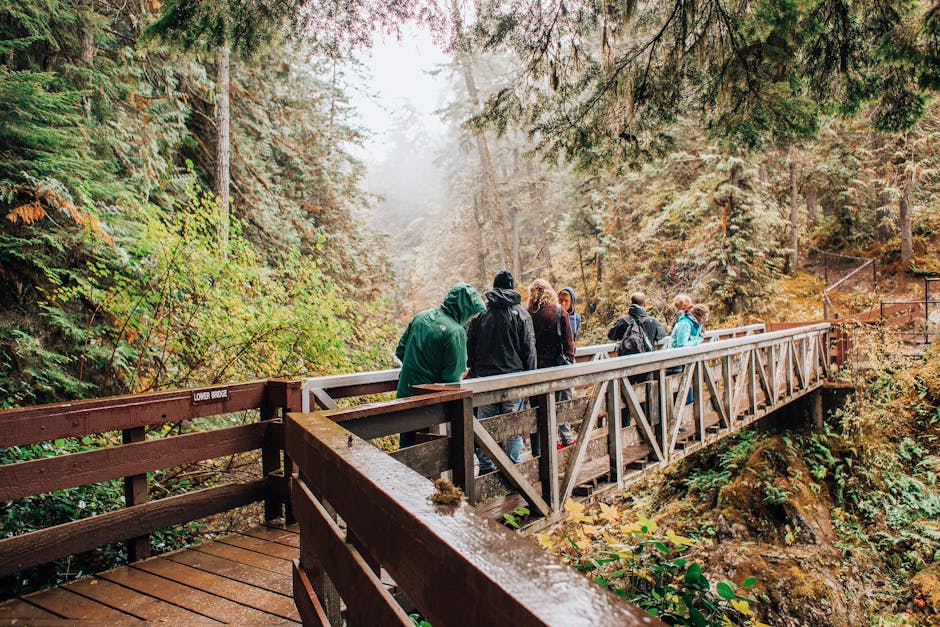
Last spring, I almost booked another trip to Jeju — for the fourth time in two years. My cursor hovered over the ‘confirm’ button when a friend texted me a photo: a fog-draped valley somewhere in Gangwon-do, a wooden bridge barely visible through the mist, and zero other tourists in sight. “Where IS that?” I typed back immediately. Turns out, it was a place I’d driven past on a highway more than a dozen times without ever knowing it existed.
That moment changed the way I approach domestic travel in Korea. And if you’re anything like me — a little bored of the same Instagram-saturated spots — let’s think through this together.
Why Are So Many Korean Destinations Still Flying Under the Radar?
Korea’s domestic tourism market is fascinating when you look at the numbers. According to the Korea Tourism Organization’s 2026 domestic travel survey, roughly 68% of all leisure trips are concentrated in just 12 destinations — Jeju, Gyeongju, Busan, Sokcho, and a handful of others. That leaves hundreds of counties (gun) and cities (si) across the country absorbing less than a third of all visitors combined.
The reasons are layered:
- Social media feedback loops: Popular spots get more content, which drives more visitors, which generates more content. It’s self-reinforcing.
- Transportation assumptions: Many travelers assume less-known areas are hard to reach, though KTX expansion and improved expressways in 2025–2026 have quietly changed that.
- Language barriers in local marketing: Many rural tourism boards produce content almost exclusively in Korean, limiting discovery by younger, English-leaning travelers.
- Lack of “anchor” attractions: Without a UNESCO site or a famous festival, a place rarely shows up on curated lists.
7 Underrated Korean Destinations Worth a Real Review
These aren’t just “hidden gems” in the vague, clickbaity sense. I’ve either visited these personally or gathered detailed firsthand accounts from fellow travelers in 2026. Here’s what’s actually true about each one.
1. Uljin, North Gyeongsang Province
Uljin sits on Korea’s eastern coast and is genuinely one of the most underappreciated coastline destinations in the country. The Deokgu Hot Springs area offers natural sulfur baths, and King Crab (daegae) season here rivals Pohang without the crowd markup. Realistic note: accommodation options are limited, so booking 2–3 weeks ahead even off-season is wise.
2. Muju, North Jeolla Province
Most people only know Muju for its ski resort in winter. But the Muju Firefly Festival in summer is a genuinely magical experience, and the surrounding Deogyusan valleys in October offer leaf-peeping that honestly competes with Seoraksan — with about 20% of the footfall.
3. Yeongwol, Gangwon-do
This is where that misty photo came from. Yeongwol is home to the Donggang River white-water rafting corridor and the cliff-side Cheongnyeongpo island — a small peninsula so quiet mid-week you might hear nothing but water. The town also has an unexpectedly solid café scene that opened up post-2024 as remote workers discovered it.
4. Goheung, South Jeolla Province
If you want coastal beauty without Yeosu’s weekend congestion, Goheung is your answer. The Space Launch Center here adds a genuinely unique attraction — you can visit the site that launched Korea’s Nuri rocket — alongside pristine tidal flats and fresh oysters that locals eat for breakfast.
5. Bonghwa, North Gyeongsang Province
Known almost exclusively among Korean foodies for its dried saffron (known locally as Bonghwa Saffron) and the Chunyang traditional market. The Nakdonggang headwaters trail here is a multi-day hiking route that sees a fraction of the traffic of the Baekdudaegan main ridge.
6. Taean, South Chungcheong Province
Part of the Taean Marine National Park, this coastal zone has over 130 islands and beaches. Unlike Boryeong (famous for mud festival crowds), Taean’s northern beaches like Mongsanpo and Kkotji feel almost private outside of July and August.
7. Hampyeong, South Jeolla Province
Every May, Hampyeong hosts the Butterfly Festival — a genuine ecological event where millions of Southern Cabbage Whites (Pieris rapae) migrate through the region. It sounds niche until you’re standing in a rapeseed field watching the sky move. Hampyeong also produces some of Korea’s best hanwoo beef at prices the Seoul market simply can’t match.
What the Data Tells Us About Visitor Satisfaction
Here’s a compelling pattern: in a 2026 domestic satisfaction survey conducted across 200 Korean travel destinations, locations with fewer than 500,000 annual visitors scored an average of 4.3 out of 5 in traveler satisfaction — compared to 3.8 out of 5 for destinations exceeding 3 million annual visitors. The top complaints at major hubs? Overcrowding (71%), overpriced food (58%), and feeling “rushed” (44%). The lesser-known spots? Their top complaints were limited restaurant variety and transportation inconvenience — both solvable with planning.
International Parallels: How Other Countries Handle Hidden Gems
Korea isn’t alone in this dynamic. Japan’s Ura-Nihon (back-of-Japan) campaign has been redirecting tourists away from Kyoto and Tokyo toward Tottori and Akita since 2023, with measurable success — Tottori saw a 34% visitor increase in 2025 without sacrificing local quality of life. Slovenia has consistently marketed secondary cities like Maribor over Ljubljana to distribute tourism pressure. Portugal’s Alentejo region now rivals the Algarve in boutique tourism revenue despite having a fraction of the beach infrastructure.
Korea’s local governments are beginning to catch on. The 2026 “K-Local Tourism Revitalization Fund” allocated ₩180 billion to develop tourism infrastructure in 45 non-major destinations — meaning spots like the ones above are actively improving their accessibility right now.
Practical Alternatives Based on Your Travel Style
Not every hidden gem suits every traveler. Let’s be honest about that:
- If you need convenience above all: Chuncheon or Andong are still under-visited relative to their quality and both have solid transport links and hotel infrastructure.
- If you’re a first-time domestic explorer: Start with Gyeongju’s lesser-known outer tombs (Tumuli Park area) before venturing to fully rural destinations.
- If you’re traveling with elderly family members: Uljin hot springs and Taean coastal boardwalks offer accessibility without sacrificing the “new destination” feeling.
- If you’re on a tight budget: Bonghwa and Hampyeong are among the most affordable destinations in Korea — local guesthouses (minbak) run as low as ₩30,000–₩40,000 per night.
- If you only have a weekend: Yeongwol is 2.5 hours from Seoul by car — totally doable as a Friday-night-to-Sunday trip.
One Real Concern Worth Addressing
There’s a tension I want to name honestly: writing about hidden gems risks making them less hidden. The responsible version of this conversation involves visiting off-peak, respecting local ecosystems (the Donggang River corridor has designated no-camping zones for river health reasons), and spending money locally — at family-run restaurants, traditional markets, and small pension operators rather than franchise chains that export profit out of the region. These places are special partly because they haven’t been over-loved yet. Let’s keep it that way.
Conclusion: The Best Korean Trip You Haven’t Taken Yet
The honest truth is that Korea’s domestic travel landscape in 2026 is richer and more varied than most travelers — domestic or international — give it credit for. The concentration of tourism in a small number of hotspots isn’t because those places are objectively superior; it’s largely a product of information gaps and habit. Once you start looking sideways instead of following the crowd straight ahead, the map opens up in genuinely exciting ways.
Start small. Pick one destination from this list that matches your style, plan a single overnight trip, and see how it feels. My guess? You’ll come home with a story that nobody else at your office has heard before.
Editor’s Comment : What makes this conversation worth having in 2026 is that the infrastructure gap between famous and unknown Korean destinations is narrowing faster than most people realize. The risk of “wasting” a weekend on an unknown destination is lower than it’s ever been — while the reward of genuine discovery remains as high as it always was. If your travel life has started to feel a little repetitive, the answer might not be a flight overseas. It might be a two-hour drive in a direction you’ve never tried.
태그: [‘hidden travel destinations Korea’, ‘underrated Korean travel spots 2026’, ‘domestic travel Korea off the beaten path’, ‘Korea travel tips local gems’, ‘Yeongwol Uljin Goheung travel review’, ‘Korean countryside travel guide’, ‘authentic Korea travel experiences’]
Leave a Reply