A friend of mine came back from a trip to southern Johor last month and said something that stopped me mid-scroll: “I almost didn’t go because every travel blog made it sound boring.” She nearly skipped Tanjung Piai National Park entirely — and that would’ve been a genuine shame. So let’s talk about why the internet keeps underselling this place, and what the actual experience looks like if you plan it right.
What Even Is Tanjung Piai — And Why Does It Keep Getting Ignored?
Tanjung Piai sits at the very southern tip of mainland Asia — not just Malaysia, but the entire Asian continent. Geographically, that’s a genuinely wild fact. You’re standing at the bottom of a landmass that stretches all the way to Siberia. Yet most travel itineraries for Johor Bahru don’t mention it at all, or bury it under “optional day trip” with zero detail.
The park itself is managed under the National Park Corporation (Perbadanan Taman Negara Johor) and covers roughly 926 hectares of mangrove forest and coastal wetland. It was gazetted as a national park in 1992 and later incorporated into the ASEAN Heritage Parks network — a designation that doesn’t get thrown around lightly. Yet most travel content treats it like a footnote.
Part of the issue is expectations. People arrive thinking “rainforest” and find mangroves instead. Those are two completely different ecosystems, and mangroves honestly require a bit more patience and curiosity to appreciate. But once you tune into what’s actually happening — the mud skippers, the fiddler crabs, the aerial roots filtering tidal saltwater — it clicks fast.
Getting There in 2025: What the Official Website Won’t Clearly Tell You
Here’s where a lot of visitors lose time. Tanjung Piai is about 90 km southwest of Johor Bahru city center. There is no direct bus. The options in 2025 are essentially:
- Self-drive or rental car: The most practical. Use Waze — Google Maps sometimes routes you down an unmaintained road near Pontian. Drive time from JB is roughly 1.5 to 2 hours depending on traffic at the Skudai interchange.
- Grab (rideshare): Available but expensive one-way (expect RM 80–120 from JB), and getting a return Grab from the park itself is unreliable. You’ll almost certainly need to pre-book a return or ask your driver to wait.
- Organized day tours from JB or Singapore: Several operators run these, typically priced between SGD 55–85 per person from Singapore. Worth it if you’re not renting a car, as they handle logistics and often include a seafood lunch in Pontian town.
- Bus to Pontian Kechil + local taxi: CAUSEWAY LINK or Transnasional operates buses to Pontian (~RM 8–12). From Pontian bus terminal, a taxi to the park runs RM 25–40. Return taxis are not guaranteed — get your driver’s number.
Operating hours as of 2025: 7:30 AM to 6:00 PM daily. Entrance fee is approximately RM 10 for adults (Malaysian), RM 20 for foreign nationals — confirm on the official Johor National Park website before visiting as fees are reviewed periodically.
The Actual Experience: What You’ll Spend Your Time Doing
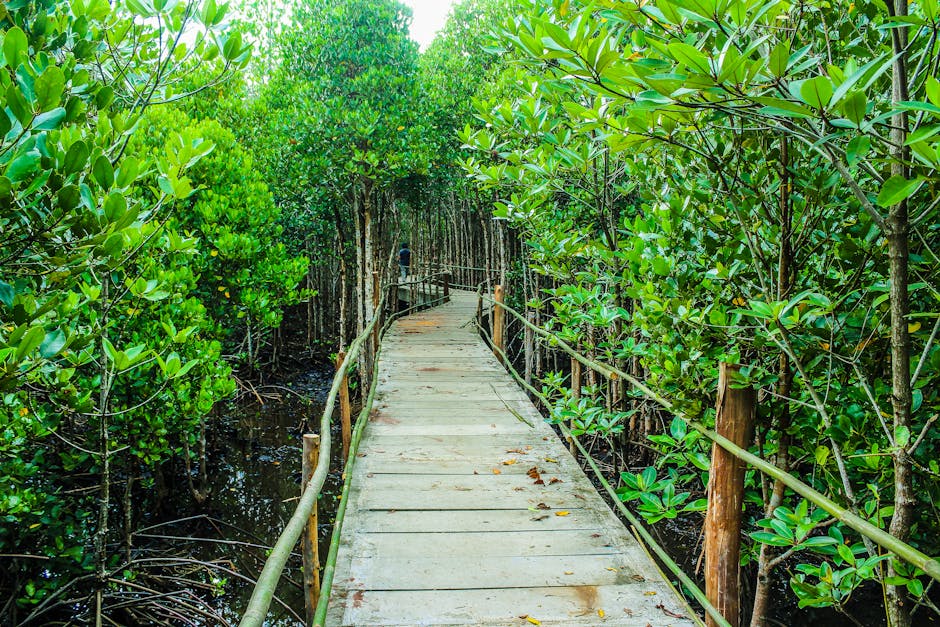
The park’s main feature is a 1.5 km elevated timber boardwalk that winds through the mangrove forest out to the southernmost point monument. The walk itself is easy — flat, shaded in sections, and takes about 30–45 minutes one way at a relaxed pace. The real reward is slowing down enough to watch the intertidal zone do its thing.
At low tide (plan around this if you can — tidal tables are available on the Malaysian Meteorological Department website), the mudflats come alive. Mudskippers, which are genuinely bizarre fish that breathe air and walk on their pectoral fins, are everywhere. Fiddler crabs perform their sidewalk negotiations. Egrets and kingfishers work the shallows. It’s legitimately one of the better wildlife-watching spots in Peninsular Malaysia for coastal species, and it costs almost nothing.
At the southernmost point itself, there’s a small monument, a lighthouse structure, and a platform over the water. On a clear day you can see Indonesian territory (Pulau Karimun) across the Strait of Malacca. That’s roughly 50 km of open water between you and the next country. It hits differently than you’d expect from a RM 20 entrance fee.
Off-Season and Crowd Strategy: The Locals’ Approach
Peak crowd times are Malaysian public holidays, school holidays (June and December primarily), and weekends, particularly Sunday mornings when local families arrive early. If you’re visiting from Singapore on a weekend, expect the car park to fill by 9:30 AM during holidays.
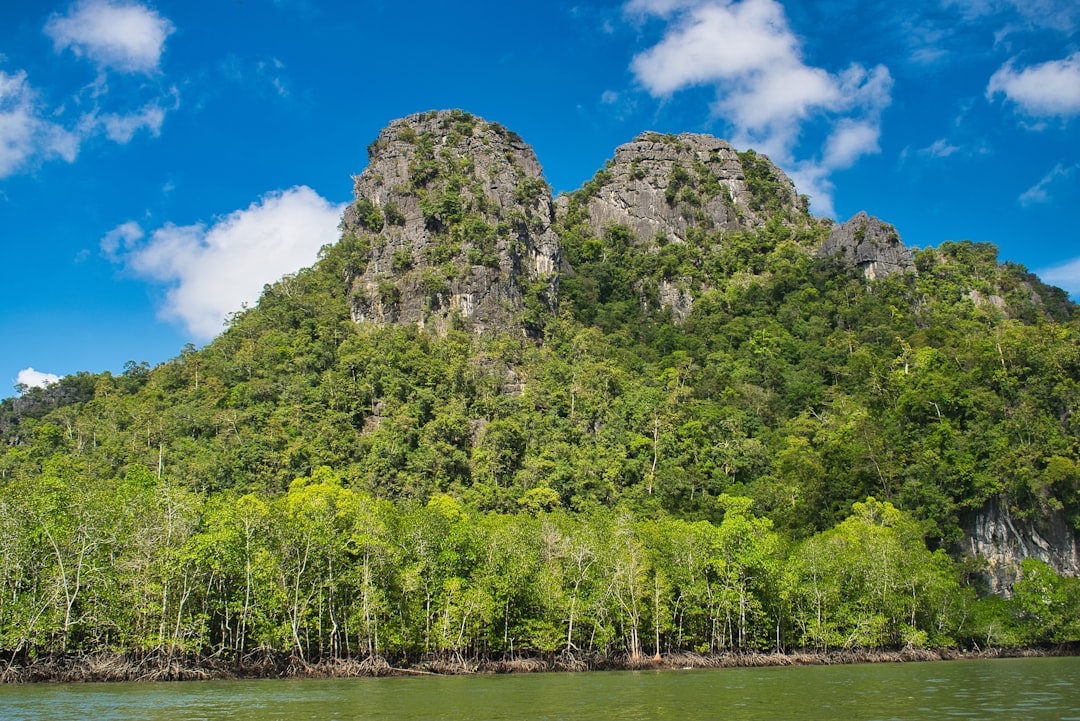
The quietest windows are weekday mornings between 8:00–10:00 AM, and the period from mid-January through February (post-school holiday lull). The monsoon shoulder season (October–November) brings occasional afternoon downpours but dramatically fewer visitors and genuinely moody, photogenic light over the mangroves. The boardwalk is mostly covered or has drainage, so light rain isn’t a dealbreaker — bring a compact umbrella rather than skipping the trip.
Nearby Pontian town is worth the stop: Pontian’s famous fried carrot cake (chai tow kueh) and fresh seafood along Jalan Besar are legitimately good, and the town has a relaxed, un-touristy energy that feels like a bonus rather than a stopover.
What to Realistically Expect vs. What Gets Overhyped
Let’s be honest about the gaps. The park’s facilities — toilets, rest shelters, information boards — are functional but not impressive. The signage explaining the ecosystem is minimal, which is a missed opportunity for a site of this ecological significance. If you’re a serious birder or naturalist, you’ll want to bring your own field guides (Phillipps’ Field Guide to the Birds of Borneo covers Peninsular species too).
The “southernmost point of mainland Asia” title does get some geographic debate — a few sources argue the distinction based on how you define the continental shelf boundary — but it’s the accepted designation and frankly, the experiential reality of standing there doesn’t need a footnote to be worthwhile.
Budget the full day: park visit (2–3 hours), lunch in Pontian (1 hour), driving buffer. Don’t try to combine it with a Johor Bahru city day — the distances make it rushed and unsatisfying.
- Best time of day: Arrive by 8:00–9:00 AM to catch low tide and morning wildlife activity
- Best months: February–May (dry season, clear skies, calm strait)
- What to bring: Insect repellent (essential), water shoes or closed-toe shoes (boardwalk can be slippery), binoculars if you have them
- What to skip: The gift shop is sparse; save your ringgit for Pontian seafood instead
- Photography: Golden hour starts around 6:00 PM — but the park closes at 6:00 PM, so arrive early and linger near closing time if the staff allow it
- Connectivity: Celcom and Maxis have decent coverage on the boardwalk; don’t rely on it for navigation inside the forest sections
Is It Worth the Trip from Singapore?
Here’s the honest conditional answer: if you’re the kind of traveler who finds beauty in ecological detail, you’ll leave genuinely moved. If you need Instagram-scale drama — waterfalls, clifftop views, dense jungle canopy — this isn’t the right day trip. But if you’ve done Sentosa, done Gardens by the Bay, done the standard Johor Bahru food run, and you want something that feels quietly significant and almost completely uncrowded by tourist standards? Tanjung Piai is the answer.
Day tour packages from Singapore that include round-trip transport, park entry, and lunch run SGD 55–85 per person and genuinely remove all the logistical friction. For first-timers without a Malaysian driving license or car access, that price is reasonable. For independent travelers, renting a car from JB and driving down with a friend cuts per-person cost significantly.
Bottom line from the trail: Tanjung Piai rewards the traveler who comes curious rather than expectant. It’s not a theme park and it’s not trying to be — it’s the quiet, muddy, biologically astonishing edge of a continent, and that’s genuinely enough. Plan your tides, pack your repellent, eat your carrot cake in Pontian on the way back, and let the mudskippers do the rest.
📚 관련된 다른 글도 읽어 보세요
- Korea’s Best-Kept Secret Travel Spots in 2026: Insider Recommendations Only Locals Know About
- 현지인만 아는 국내 비밀 명소 12곳 + 구글에도 없는 입구 정보 2026
- 주말에 아이 데리고 갔다가 완전히 반한 2026 국내 테마파크 TOP 5: 줄 서는 시간까지 계산해서 고름
태그: Tanjung Piai National Park, southernmost point of Asia, Johor day trip, Malaysia ecotourism, mangrove forest travel, Singapore day trip Malaysia, Johor Bahru travel guide
Leave a Reply