Let me paint you a picture: It’s 11 PM at 35,000 feet, your 18-month-old has just launched a half-eaten rice cracker across the aisle, your seat-back screen is frozen, and the passenger in front has fully reclined their seat into your lap. Sound familiar? If you’ve ever traveled long-haul with a baby or toddler, you know this is less “adventure” and more “survival exercise.”
But here’s the thing — I’ve done the Seoul-to-Los Angeles route twice with my daughter before she turned three, and I lived to write about it. More importantly, I picked up genuinely useful strategies that no parenting book seems to spell out clearly. Let’s think through this together, because what works isn’t always what the Instagram travel moms suggest.
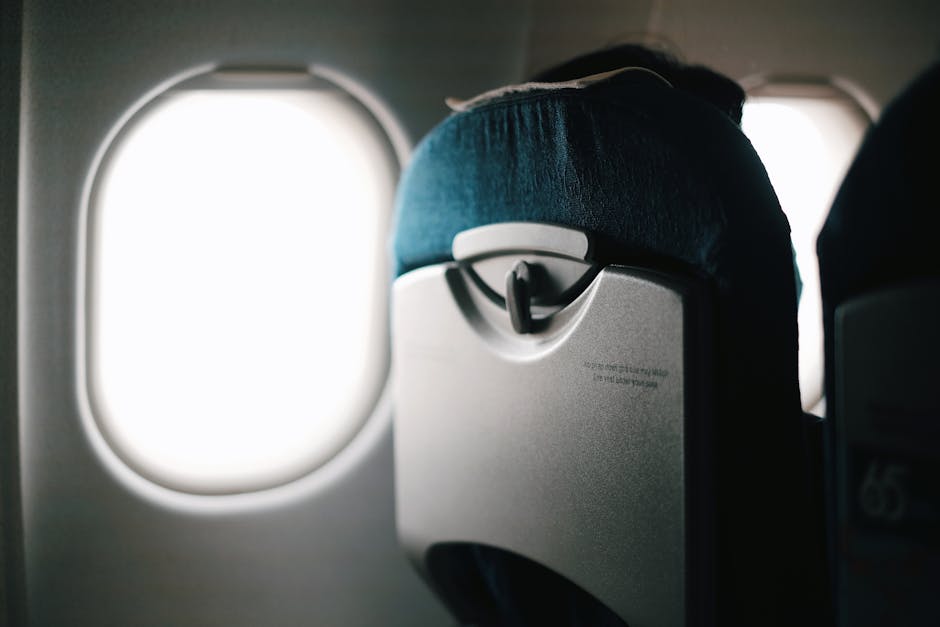
🛫 The Numbers Don’t Lie: Why Long-Haul with Little Ones Is Genuinely Hard
Before we dive into solutions, let’s acknowledge the reality. A long-haul flight — typically defined as anything over 6 hours — is physiologically rough on adults. For children under 3, whose circadian rhythms are still developing and whose ears are more sensitive to pressure changes, it’s exponentially harder. According to pediatric aviation health data reviewed in early 2026, children aged 6 months to 2 years are statistically the most disruptive age group on flights, not because parents are careless, but because that developmental window is genuinely the most challenging for environmental adaptation.
Popular routes like Incheon–London (about 12 hours), Tokyo–New York (roughly 13–14 hours), and Seoul–Sydney (10+ hours) represent serious marathons for little bodies. Understanding this helps you plan realistically, not optimistically.
🎒 Pre-Flight Prep: The 80% Rule
Here’s a framework I swear by: 80% of your in-flight success is determined before you board. The chaos you manage on the plane is largely a reflection of how well you prepared at home. Let’s break this down practically.
- Book the bassinet row early (and strategically): Bulkhead bassinet seats are gold for infants under roughly 10–11 kg. But they come with a catch — no under-seat storage, and the fixed armrests can be awkward. Book these as soon as your ticket is confirmed, and call the airline directly to lock it in. Most airlines including Korean Air, Asiana, and major international carriers fill these fast in 2026.
- Time your flight around sleep schedules: Red-eye flights are your friend with toddlers. A flight departing at 10–11 PM local time means you’re boarding right around their natural sleep window. The first 4–5 hours can be surprisingly calm if bedtime routine is intact.
- Pack a dedicated “magic bag” of novelty items: Not their usual toys. Go to a dollar store or grab inexpensive new items they’ve never seen before. The novelty factor buys you time — often 15–20 minutes per new item, which adds up significantly on a 12-hour flight.
- Download content offline ahead of time: In-flight Wi-Fi is inconsistent in 2026 despite improvements. Download favorite shows on Netflix, YouTube Kids, or Disney+ before departure. Bring a lightweight tablet with a toddler-proof case.
- Pre-pack snacks that aren’t messy or crunchy: Think: pouched applesauce, soft cheese sticks, small crackers in a zip bag. Avoid anything that crumbles or smells strongly. Your seat neighbors will silently thank you.
- Ear pressure management: For infants, breastfeeding or bottle-feeding during ascent and descent helps equalize ear pressure through swallowing. For toddlers old enough, a lollipop or chewing gum works beautifully. Pediatricians often suggest saline nasal spray before boarding if the child has any congestion.
- Dress in layers — for everyone: Cabin temperatures fluctuate wildly. Bring a light zip-up for your child that’s easy on and off. Avoid anything with lots of buttons or snaps — you’ll be changing in a bathroom the size of a shoebox.
✈️ Real Parent Stories: What Different Families Actually Experienced
Let’s look at some real-world scenarios to ground this in reality rather than theory.
Case 1 — The Seoul to Frankfurt Route (Korean Family, 2026): A mother of a 2-year-old shared her experience on a popular Korean parenting community this past January. She’d prepared obsessively — new sticker books, snack pouches, a mini light-up toy, downloaded Paw Patrol episodes. Her verdict? “The first 4 hours were fine. The middle stretch was rough. The last 3 hours she slept.” Her key takeaway: the middle stretch is always the hardest on long flights, and knowing that helped her stay mentally prepared rather than panicking when it happened.
Case 2 — The Sydney to London Ultra-Long-Haul (Australian Family): A travel blogger documented their experience on the Qantas Project Sunrise-inspired long-haul service earlier in 2026. With a 20-month-old, they used the airline’s provided infant meal, brought a compact travel mat for the floor (some airlines now tolerate this on long flights when space allows), and rotated entertainment every 20 minutes to prevent screen fatigue. Their biggest recommendation? Ask flight attendants for help without hesitation. Most long-haul crews in 2026 are well-trained for infant travel and genuinely want to help — but they won’t always offer unless asked.
Case 3 — Budget vs. Full-Service Carriers: This is a comparison worth making seriously. Low-cost carriers like AirAsia or Scoot can seem attractive on price, but they typically don’t offer bassinets, have less overhead storage, and have stricter limits on carry-on liquids including baby formula. For flights under 5 hours, budget carriers are manageable. For 8+ hours with an infant, the difference in service quality on full-service carriers often justifies the price gap — especially when you factor in the free baby meal, bassinet, and a more relaxed attitude toward milk bottles going through security.
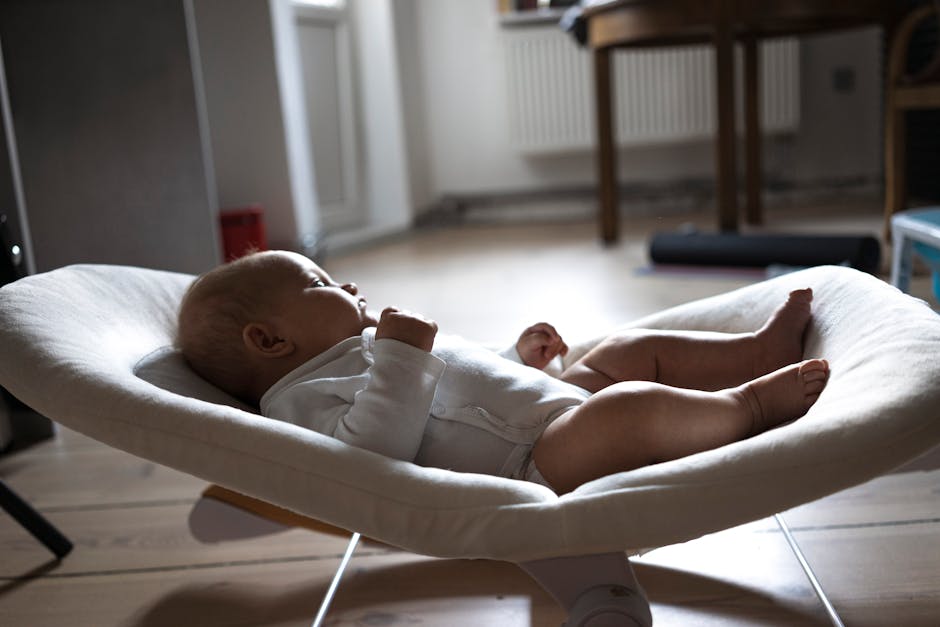
🧠 In-Flight Sanity: Moment-to-Moment Strategy
Even the best preparation meets turbulence — literally and figuratively. Here’s what to do once you’re actually in the air.
- Use the walk-around method: A slow lap around the cabin every 45–60 minutes gives your toddler stimulation and breaks the confinement frustration. Most children calm down significantly just from being upright and moving.
- Tag-team with your partner: If you’re flying with another adult, schedule “shifts” explicitly. One sleeps while the other manages. Flying solo with a toddler is genuinely hard — if that’s your situation, choose aisle seats so you can move freely, and consider booking a seat next to the galley area where crew can keep an eye out.
- Don’t fight the schedule — adapt to it: If your toddler falls asleep at an “inconvenient” time, let them. Don’t try to keep them awake to preserve the night schedule — a sleeping child on a plane is a gift, full stop.
- Bring a portable white noise app or small speaker: Cabin noise actually helps many toddlers sleep. An app like Calm Baby or a white noise track can bridge the gap when they’re overtired but overstimulated.
🌍 Realistic Alternatives: What If It’s Just Too Much?
Now, here’s where we get honest. Long-haul with infants isn’t always the right call, and sometimes the best tip is: consider whether now is the right time.
If your trip is flexible and your child is currently in the 10–18 month window (often the hardest age for flight — mobile enough to resist restraint, not old enough to understand reasoning), it’s worth asking whether waiting 6–9 months changes your experience dramatically. At age 2.5–3, children can engage with tablets, respond to simple bargaining, and follow basic instructions. The flight experience genuinely improves.
If the trip is non-negotiable — a family event, a relocation, a long-awaited reunion — then commit fully to the prep strategy above. Don’t half-prepare hoping it’ll be fine. It might be! But preparation is your insurance policy.
Also worth considering: stopovers as a strategy, not a delay. A 14-hour direct flight versus two 7-hour flights with a layover in Singapore or Dubai might seem like more travel, but it gives everyone a reset. A few hours in an airport lounge with space to run around can re-energize a toddler dramatically. Many families in 2026 are choosing this intentionally rather than just for scheduling reasons.
Editor’s Comment : Flying long-haul with a tiny human is one of those experiences that will feel completely impossible in the planning stage, chaotic in the middle, and — somehow — totally worth it when you look back. The key is adjusting your expectations: this isn’t a relaxing flight, it’s a mission. Plan like it, staff yourself accordingly, and give yourself full credit for attempting it at all. You’ve got this.
태그: [‘long haul flight with toddler’, ‘baby airplane travel tips 2026’, ‘flying with infants’, ‘toddler travel hacks’, ‘family travel 2026’, ‘airplane bassinet tips’, ‘international travel with kids’]
Leave a Reply